Yasawa Islands
Island-hopping by catamaran, manta rays from May to October and simple beach bures, with long boat days and no banks on the islands.
January, this month52/100February, this month56/100March, this month56/100April, this month66/100May, this month85/100June, this month93/100July, this month96/100August, this month96/100September, this month95/100October, this month90/100November, this month81/100December, this month64/100
How the score works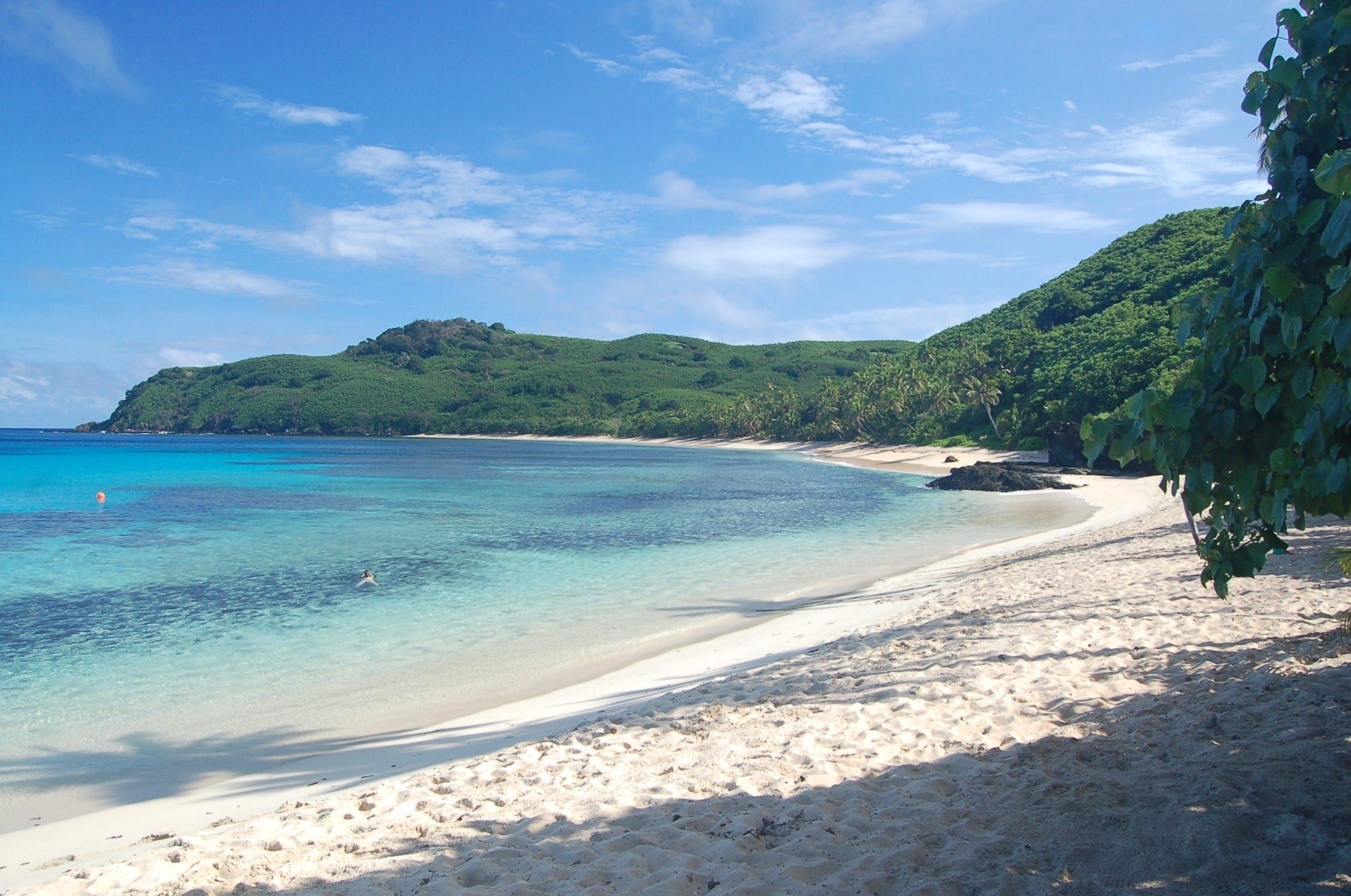

At a glance
Flights from New Zealand
- Auckland
- Fly to Nadi, then ferryAir New Zealand, Fiji Airways, Yasawa Adventures Fiji and South Sea Cruisesabout 6 h 45 min
- Wellington
- Fly to Nadi, then ferryFiji Airways, Yasawa Adventures Fiji and South Sea Cruisesabout 7 h 30 min
- Christchurch
- Fly to Nadi, then ferryFiji Airways, Yasawa Adventures Fiji and South Sea Cruisesabout 7 h 45 min
Typical scheduled times from each airline or operator. With a change, we allow 1 h 30 min to change planes and 1 h to get from an airport to a boat or onward flight.
- Time
- 1 hour behind NZFrom 4 April 2027: same time as NZ.From 26 September 2027: 1 hour behind NZ.
- Money
- NZ$1 ≈ FJ$1.26Fijian dollar. Mid-market rate on 13 October 2026: card and cash rates are worse.
- Entry
- No visa needed with an NZ passport.Entry rules in Know before you go
- Plugs
- Type I, the same as NZ
- Driving
- On the left, as in NZ
- Language
- English and iTaukei (Fijian)
- Cost
- Above NZ prices
- The island
- 135 km² of land · highest point 600 m
The short version
The Yasawas are a chain of about 20 islands, by Tourism Fiji’s count, sitting 50 to 80 kilometres from Nadi. There are no banks, and usually nowhere to eat but your own resort. Most of the islands the ferry serves are owned by local villages, and most resort staff come from those villages.
You get here by boat, and the boat is part of the holiday. The main ferry, a fast catamaran, works its way up the chain each morning, and small resort boats come out to meet it at every stop. The Yasawas suit couples, island-hoppers on a pass, snorkellers and anyone happy with simple comforts. It’s harder going with toddlers or with limited mobility.
The catch is logistics. The trip to the northern islands takes most of a day, you’ll often need a night in Nadi at one or both ends, many resorts run on generators for part of the day and meals are a compulsory resort plan. Our verdict: a great week of reef, beach and boat rides from May to October, if you build some slack into both ends.
Who Yasawa Islands suits
Each score is out of 5, against the other islands we cover.
Best for
- Couples: 4 out of 5.Small beachfront resorts, adults-only options around the Blue Lagoon and quiet nights once the generators go off.
- Honeymoons: 4 out of 5.Turtle Island takes only 14 couples at a time, and small adults-only resorts suit a quiet stay; many others skew social.
- Adventure: 4 out of 5.Hop islands on a Bula Pass, snorkel with reef sharks off Kuata, swim into the Sawa-i-Lau caves and climb island summits at sunrise.
The catch
A long day each wayReaching the northern islands takes most of a day, often with a night in Nadi at either end, and meals are a compulsory resort plan.
Show the other nine ratings
- Beaches: 4 out of 5.Almost every resort sits on the beach with coral at the door, and at least one Blue Lagoon resort has all-tide swimming.
- Snorkelling and diving: 4 out of 5.Manta rays feed in the Drawaqa channel from May to October and resorts run reef-shark snorkels and dives, though mantas aren’t guaranteed.
- Nature: 4 out of 5.Volcanic peaks, marine protected areas around Kuata and Drawaqa, and manta rays in season.
- Rest: 4 out of 5.Boat-only access, small resorts and patchy 3G make it easy to switch off, if you don’t mind generator hours.
- Families: 3 out of 5.Family bures and a couple of resort kids’ clubs, but long transfers, small tender boats and no medical facilities in the islands.
- Culture: 3 out of 5.Most islands are village-owned and resorts run village visits and kava ceremonies, but most of your time is spent at the resort.
- Value for money: 3 out of 5.Dorm beds start around NZ$52–72 a night, but compulsory meal plans and transfers push a private-bure stay well past the room rate.
- Luxury: 3 out of 5.Turtle Island and a few upmarket resorts cover the top end, but most Yasawa stays are simple bures rather than polished luxury.
- Food and wine: 1 out of 5.Meals are a compulsory resort plan, and there is usually no other place to eat on your island.
When to go
May to October is the time to go. It’s Fiji’s dry season, with sunnier days and much less rain. The sea stays warm all year, and Tourism Fiji says the dry months give the best snorkelling visibility. It’s also manta ray season in the channel off Drawaqa.
The trade-off is demand. June to August is Fiji’s busiest stretch, as New Zealanders and Australians escape winter, and Yasawa resorts are small, so the popular ones fill up. If you’re travelling in the July school holidays, book early. December and January are a smaller second peak.
November to April is the wet season and cyclone season. Most days still mix sunshine with a short, heavy downpour, but a storm can stop the boats. When Tropical Cyclone Vaianu passed in April 2026, day trips stayed suspended on 9 April and most resort transfers were suspended or cut back, with normal service back the next day. Outer-island resorts may move guests to the mainland while the sea is still safe, so buy insurance that covers delays. The upside is price: at least one Blue Lagoon resort advertises lower rates for stays of five nights or more between November and March.
Best from June to OctoberHighest score 96 (excellent) in July and August; lowest 52 (fair) in January.
Show the numbers
| Month | Score | Rating | Air high °C | Air low °C | Sea °C | Rain mm | Cyclones within 200 km |
|---|---|---|---|---|---|---|---|
| January | 52 | Fair | 32 | 25 | 29 | 284 | 2 in 30 seasons |
| February | 56 | Fair | 32 | 25 | 29 | 268 | 3 in 30 seasons |
| March | 56 | Fair | 32 | 25 | 29 | 279 | 1 in 30 seasons |
| April | 66 | Good | 31 | 25 | 29 | 209 | 3 in 30 seasons |
| May | 85 | Excellent | 30 | 24 | 28 | 126 | 1 in 30 seasons |
| June (best months) | 93 | Excellent | 30 | 23 | 27 | 83 | none in 30 |
| July (best months) | 96 | Excellent | 29 | 22 | 27 | 54 | none in 30 |
| August (best months) | 96 | Excellent | 29 | 22 | 26 | 63 | none in 30 |
| September (best months) | 95 | Excellent | 29 | 23 | 27 | 65 | none in 30 |
| October (best months) | 90 | Excellent | 30 | 23 | 27 | 119 | none in 30 |
| November | 81 | Excellent | 30 | 24 | 28 | 138 | none in 30 |
| December | 64 | Fair | 31 | 25 | 28 | 191 | 6 in 30 seasons |
NZ school holidays shown, 16 October 2026 to 15 October 2027: 19 December 2026 to 27 January 2027; 10–26 April 2027; 3–18 July 2027; 25 September to 10 October 2027.
Where to stay
Choose by how far up the chain you’re willing to go. The southern islands are the shortest boat ride, the middle islands are about the mantas, and the Blue Lagoon in the north has the caves and the longest trip. A Bula Pass makes it easy to split a week between two areas. Wherever you stay, add a night near Denarau on the way out, because the boat leaves early.
© OpenStreetMap contributors
On another island, not marked here: 4 Denarau and Nadi, the night before.
Southern Yasawas: Kuata and Waya
The gateway islands, about 1¾ to 2¼ hours from Port Denarau on the Yasawa Flyer. Volcanic peaks, reef-shark snorkelling off Kuata and the Waya Lailai summit hike. One of the shortest boat rides, so an easy pick for a short stay.
Best for
See stays in the southern Yasawas, on Booking.com (opens in a new tab)
Manta Ray area: Drawaqa, Nanuya Balavu and Naukacuvu
Mid-chain islands beside the channel where manta rays feed from May to October, nearly 3 hours by boat. A mix of social backpacker-style resorts and an upmarket resort with kids’ and teens’ clubs.
Best for
See stays in the Manta Ray area, on Booking.com (opens in a new tab)
Blue Lagoon: Nacula, Tavewa and Nanuya Lailai
The northern end, around the lagoon itself and close to the Sawa-i-Lau caves. Home to adults-only boutique stays, a resort with a kids’ club, and Turtle Island. About 4½ hours by boat, or about 30 minutes by seaplane from Nadi.
Best for
See stays in Blue Lagoon, on Booking.com (opens in a new tab)
Denarau and Nadi, the night before
The Yasawa Flyer leaves Port Denarau at 8.45am, so the operator suggests flying in the day before. Denarau puts you beside the wharf; most Nadi and Wailoaloa hotels are on the free coach route for pass and package bookings.
Best for
See stays in Denarau and Nadi, on Booking.com (opens in a new tab)
Things to do
The Yasawas are for being in the water. Snorkelling off the beach is the default day. Manta rays, reef sharks and the Sawa-i-Lau caves are the big outings, and a summit walk or village visit breaks things up. You book most activities through your resort, and what’s on offer depends on where you stay, so check before you choose an island.
Swim with manta rays
From May to October, manta rays feed in the channel between Drawaqa and Nanuya Balavu on the turn of the tide. Nearby resorts run snorkel trips. Sightings aren’t guaranteed, and Yasawa Adventures substitutes another snorkel on its manta trips if none show.
Find tours: Swim with manta rays, on GetYourGuide (opens in a new tab)
Sawa-i-Lau caves
A limestone island in the northern Yasawas with a saltwater pool lit through a vent in the roof, and a second chamber reached through an underwater tunnel with a local guide. Stay in the Blue Lagoon area to go early, before the day-trip crowds.
Find tours: Sawa-i-Lau caves, on GetYourGuide (opens in a new tab)
Snorkelling the Blue Lagoon
The lagoon ringed by Nanuya, Matacawalevu, Tavewa and Nacula is the spot Tourism Fiji calls ideal for snorkelling, and the setting for the Hollywood film The Blue Lagoon. At least one beach here is swimmable at any tide.
Reef sharks off Kuata
On Kuata, at the southern gateway, a resort inside a marine protected area runs reef-shark snorkels and an introductory dive with reef sharks. It’s one of the shortest boat rides from Denarau, so it works for a one- or two-night stay.
Find tours: Reef sharks off Kuata, on GetYourGuide (opens in a new tab)
Summit walks
Several resorts run guided summit walks, best at sunrise or sunset. Tourism Fiji singles out the rocky top of Waya Lailai in the south. Go early, carry water and tell your resort where you’re going.
Village visit and sevusevu
Resorts arrange visits to nearby villages, usually with a sevusevu, a gift of kava to the chief asking permission to enter. Cover shoulders and knees, take off hats and sunglasses, and don’t plan one for a Sunday.
Island-hopping on a Bula Pass
A Bula Pass gives unlimited hops on the Yasawa Flyer for 5 to 15 days, so a week can be split across two or three islands. You book each night’s bed separately and each hop at least 24 hours ahead.
Partner links: we may earn a commission. It never changes our verdicts. They go to GetYourGuide. How we make money
Getting there
Plan on flying to Nadi, because every route to the Yasawas starts on that side of Viti Levu. Air New Zealand flies non-stop from Auckland daily and connects from its domestic network. Fiji Airways flies non-stop from Wellington, and Christchurch Airport lists four Fiji Airways flights a week at the time of writing (October 2026). Pacific schedules change often, so check before you book.
Port Denarau is about 30 minutes by road from Nadi International Airport. From there, the Yasawa Flyer, a 320-seat catamaran run by South Sea Cruises, leaves at 8.45am every day. Check in at least 30 minutes before. It calls at South Sea Island in the Mamanucas, then heads north as far as the Blue Lagoon and is back at Denarau around 6pm.
Arrival times are indicative and depend on the sea. As a guide, the boat reaches Kuata in the south at about 10.30am, the manta area at about 11.35am and Nacula in the Blue Lagoon at about 1.15pm. A pre-booked coach leaves the airport at 7.15am, but unless you land very early, the operator recommends flying in the day before. Luggage is limited to a 7kg carry-on and one bag up to 25kg.
There are other ways in. A seabus runs daily from Lautoka Wharf, and water taxis can be chartered from Port Denarau, Vuda Marina or Lautoka. Seaplanes and helicopters fly from Nadi Airport, and Tourism Fiji’s resort listings give about 30 minutes by seaplane to the Blue Lagoon area.
Getting around
In the islands, everything moves by boat: the Flyer, resort boats and water taxis. If you want to see more than one island, a Bula Pass gives unlimited Flyer hops for 5 to 15 days. You need a bed booked for every night you get off, and each hop booked at least 24 hours ahead. The travel desk on board takes bookings as you go, but only by card.
Getting on and off is the tricky part. Small tender boats meet the Flyer offshore and carry guests and bags to each resort. If that would be hard for you, tell the operator when you book.
On the mainland, yellow taxis at Nadi Airport start from FJ$7; pay cash and make sure the meter is on. Fiji drives on the left, like NZ. Rental firms generally want a full licence in English, a bond and a driver aged at least 21. Highways are 80 km/h, towns 50 km/h, and seatbelts are compulsory. Check licence rules with Fiji’s Land Transport Authority before you drive.
Money
Fiji uses the Fijian dollar. There are no banks in the Yasawas, so get cash before you leave. The bank at Nadi Airport is open 24 hours, and there are ATMs at the airport, in Nadi town, at Wailoaloa and at Port Denarau. Bring a card as well, because some resorts don’t take cash and the Flyer is card only. SafeTravel warns about card fraud, so take care at ATMs.
The big costs are transfers, meals and your bed. A Bula Pass runs NZ$505–747 per person. Meal plans are compulsory and cost about FJ$149–209 per person per day at most resorts for 2026–27, though at least one upmarket resort charges FJ$249. They’re usually paid at the resort in Fijian dollars. For a couple, that’s roughly FJ$300–420 a day at most resorts, and unused meals aren’t refunded.
Beds range widely. Dorms start around NZ$52–72 a night. Among the examples listed, an ensuite bure or villa runs from about NZ$190 to NZ$1,120 per person per night, twin share, before meals. Snacks and bottled drinks can cost a little more on the outer islands because everything comes in by boat. Yasawa Adventures adds 2.5–3% for card payments.
Know before you go
Entry. As of October 2026, New Zealand is on Fiji’s visa-exempt list. You get a visitor permit of up to 4 months on arrival. Bring a passport valid for 6 months beyond your stay, a return or onward ticket and your resort’s address, and fill in the arrival card. Check Fiji Immigration before you travel.
Health. There are no medical facilities in the Yasawas, so any medical problem means getting back to Nadi. SafeTravel advises insurance that covers medical evacuation by air. Pack a first-aid kit and your prescriptions, as pharmacies are limited on the islands. Fiji is free of malaria, but dengue occurs, and SafeTravel’s June 2026 update said dengue activity remained elevated across the Pacific. The mosquitoes that spread it mostly bite by day, so use DEET repellent; most resorts have nets or screened windows. Most resorts advise against drinking the tap water, as outer islands rely on rainwater and bores, and they provide filtered or bottled water instead.
Ocean safety. Most beaches have no lifeguards. Ask staff where to swim, and keep clear of reef gaps and areas with boat traffic, where currents can be stronger. If you’re not a confident swimmer, wear a lifejacket for the manta snorkel. Check that boats carry life jackets, and never stand on coral.
Sundays and customs. Sunday is a day of rest and church in the Yasawas. Usual resort activities aren’t offered and most village visits don’t run, though visitors are often welcome at church. In a village, cover your shoulders and knees (a sulu works), take off your hat and sunglasses, ask before taking photos and take your shoes off before going inside. Swimwear is fine at resorts.
Power and phones. Fiji uses the same 240-volt, three-pin plugs as NZ. But resort generators often run only from sunset to around midnight and in the early morning, so bring a power bank. There’s 3G across much of the chain, but it drops in and out. Buy a local SIM at Nadi Airport or a Vodafone or Digicel shop before you sail.
What things cost
Prices from the sources below, in the currency they were quoted in and dated. They change, so treat them as a guide.
| What | Price |
|---|---|
| Bula Pass, 5–15 days of Yasawa Flyer hopsYasawa Adventures Fiji pricing for travel 1 September 2026 to 31 March 2027; beds and meals not included. | NZ$505–747 per person |
| Compulsory resort meal planOperator-listed rates for 1 September 2026 to 31 March 2027 at most resorts on the Flyer route; at least one upmarket resort charges FJ$249, and a few charge à la carte. | FJ$149–209 per person per day |
| Dorm bed, extra nightExamples from five resorts with dorms on the Yasawa Adventures site, for travel from 1 September 2026 to 31 March 2027; meals extra. | NZ$52–72 per person |
| Ensuite bure or villa, extra night, twin shareExamples from six resorts on the Yasawa Adventures site, from a garden bure on Kuata to a two-bedroom beachfront villa at the upmarket end; meals extra. Travel from 1 September 2026 to 31 March 2027. | NZ$190–1,121 per person |
| Air New Zealand, Auckland to Nadi, one wayLowest fare shown on Air NZ’s Fiji page on 11 October 2026, for 18 November 2026 and 7 January 2027 departures. Fares vary with demand. | from NZ$351 |
| Card fee on Yasawa Adventures bookings2.5% on Visa and Mastercard, 3% on American Express. | 2.5–3% |
| Taxi from Nadi AirportTourism Fiji; pay in cash and check the meter is on. | from FJ$7 |
Questions people ask
Do New Zealanders need a visa for the Yasawa Islands?
No. New Zealand is on Fiji’s visa-exempt list, and you get a visitor permit of up to 4 months on arrival at Nadi. Bring a passport valid for 6 months beyond your stay, a return or onward ticket and your resort’s address, and fill in the arrival card. Check Fiji Immigration before you go, as rules can change.
When is the best time to visit the Yasawa Islands?
May to October. It’s the drier, sunnier season, snorkelling visibility is at its best and it’s manta ray season. June to August is Fiji’s busiest stretch, so book early for the NZ July school holidays. November to April is hotter and wetter, and it’s cyclone season, when a passing storm can stop the boats.
How many days do you need in the Yasawas?
Plan on at least four or five nights. The boat takes about 4½ hours to the northern islands, and you’ll often need a night in Nadi or Denarau at one or both ends. Yasawa Adventures’ hop-on passes run from 5 to 15 days, which is a fair guide to how long an island-hopping trip takes.
Are the Yasawa Islands good for young kids?
With planning. Some resorts have family bures and kids’ clubs, and child rates are available on request. But there are no medical facilities in the islands, getting on and off the Flyer means stepping into small tender boats, most beaches have no lifeguards and power often runs only part of the day.
Do I need cash in the Yasawa Islands?
Bring both cash and a card. There are no banks in the Yasawas, so withdraw Fijian dollars at Nadi Airport, Nadi town, Wailoaloa or Port Denarau. Some resorts don’t take cash at all and the Yasawa Flyer is card only, but smaller purchases and village visits are easier with cash.
How do you get around the Yasawa Islands?
By boat. The Yasawa Flyer runs the length of the chain every day, resort tenders meet it at each stop, and water taxis can be chartered from Port Denarau, Vuda Marina or Lautoka. A Bula Pass covers unlimited Flyer hops for 5 to 15 days.
Compare Yasawa Islands with
- Mamanuca Islands
Reef-sheltered resorts a short boat ride from Nadi: Fiji’s easiest island escape, priced like resorts and sometimes reached with wet feet.
Best May–OctAbout 4 h 45 min from Auckland (fly to Nadi, then ferry)Above NZ prices
- Taveuni
Fiji’s Garden Island: soft-coral diving, rainforest waterfalls and a slow pace, if you can handle an extra flight and cash.
Best Jun–OctAbout 5 h 15 min from Auckland (via Nadi)Above NZ prices
- Vavaʻu
Humpback whales, sheltered sailing and cave snorkelling in northern Tonga, reached by a second, weather-dependent flight after Auckland.
Best May–OctAbout 5 h from Auckland (via Tongatapu)About NZ prices
Island outlines © OpenStreetMap contributors
Sources
Last checked
Every fact on this page comes from one of these. Rules and prices change, so check the official source before you book. All 35 were read on .
- SafeTravel: Fiji
- SafeTravel: Dengue fever outbreak in the Pacific
- Fiji Ministry of Immigration: Visit Fiji
- Fiji Ministry of Immigration: Visa exempted countries
- Tourism Fiji: Yasawa Islands
- Tourism Fiji: Visas and entry requirements
- Tourism Fiji: Climate in Fiji
- Tourism Fiji: Getting around by water
- Tourism Fiji: Land and airport transfers
- Tourism Fiji: Road safety
- Tourism Fiji: Health and hospitals
- Tourism Fiji: Is tap water safe to drink in Fiji?
- Tourism Fiji: Water safety
- Tourism Fiji: Natural disasters
- Tourism Fiji: Village etiquette tips
- Tourism Fiji: Common mistakes first-time visitors make
- Tourism Fiji: Top tips for visiting Fiji with kids
- Yasawa Adventures Fiji: FAQs
- Yasawa Adventures Fiji: General info
- Yasawa Adventures Fiji: Resort transfers
- Yasawa Adventures Fiji: Bula Pass
- Yasawa Adventures Fiji: Swim with manta rays
- Yasawa Adventures Fiji: Barefoot Kuata Island Resort
- Yasawa Adventures Fiji: Sawa-i-Lau caves
- Yasawa Adventures Fiji: Blue Lagoon Beach Resort
- Yasawa Adventures Fiji: Mantaray Island Resort
- Yasawa Adventures Fiji: Barefoot Manta Island Resort
- Yasawa Adventures Fiji: Naukacuvu Island resort
- Yasawa Adventures Fiji: Octopus Resort
- Air New Zealand: Flights to Fiji
- Christchurch Airport: Flight schedules
- Wellington Airport: Routes
- Wellington Airport: Airline contacts
- Turtle Island
- Blue Lagoon Beach Resort
Show all 35 sourcesShow the first 8 only
Data behind the charts
- Climate
- Meteostat weather-station normals (CC BY 4.0) and NASA POWER model data.
- Sea temperature
- NOAA OISST v2.1, 1991–2020 monthly means (NOAA PSL).
- Cyclones
- IBTrACS v04r01 storm tracks, 1991–2020 (NOAA NCEI).
- Flight and ferry times
- Airline, operator and tourism-board pages: fiji.travel, yasawafiji.com, airnewzealand.co.nz
- School holidays
- Ministry of Education term dates. education.govt.nz
- Exchange rate
- Frankfurter (European Central Bank and other central banks).
- Island facts
- Wikidata (CC0).
- Outline map
- © OpenStreetMap contributors (ODbL).