Mamanuca Islands
Reef-sheltered resorts a short boat ride from Nadi: Fiji’s easiest island escape, priced like resorts and sometimes reached with wet feet.
January, this month52/100February, this month54/100March, this month55/100April, this month69/100May, this month88/100June, this month95/100July, this month97/100August, this month97/100September, this month96/100October, this month94/100November, this month83/100December, this month64/100
How the score works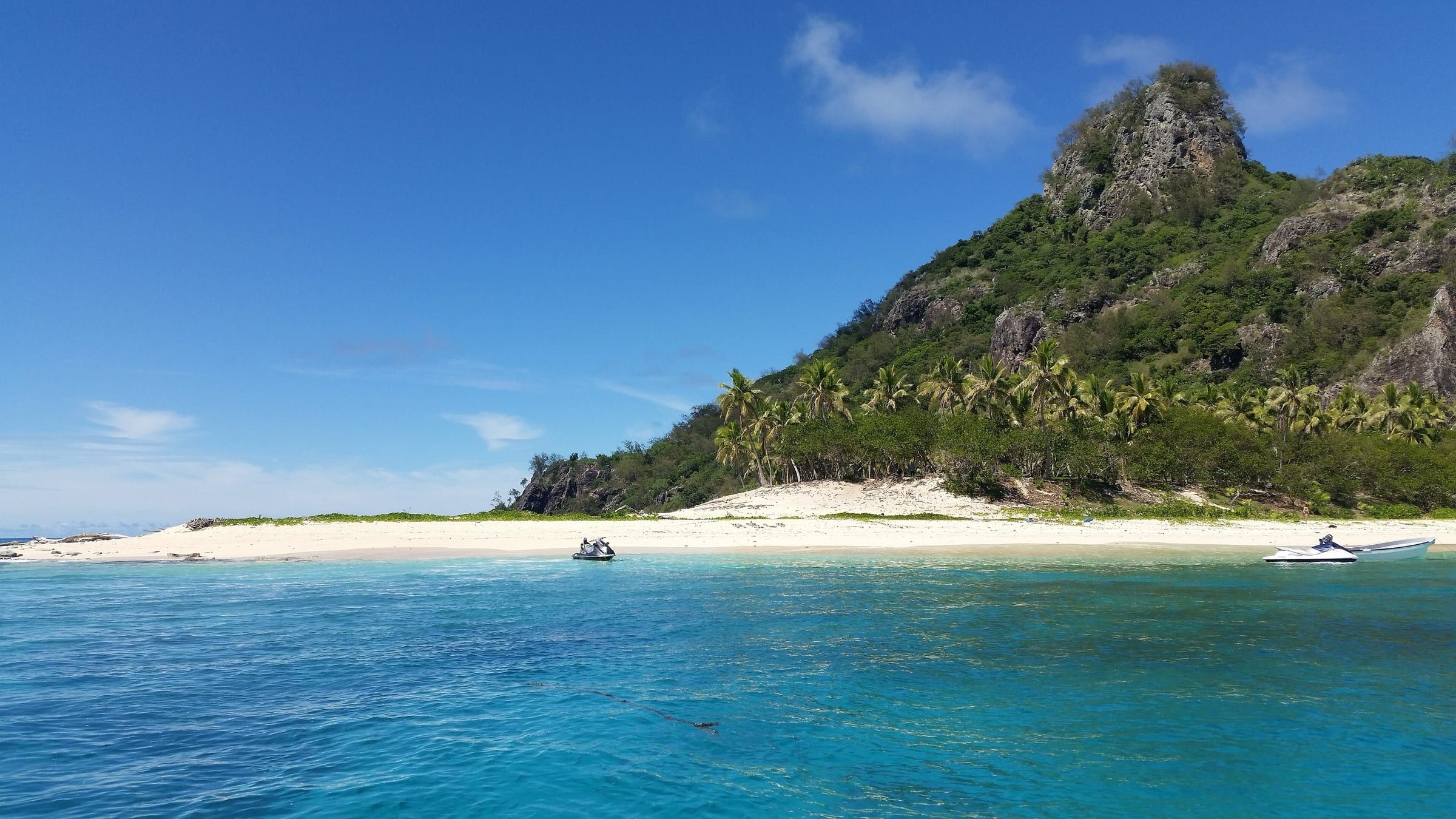

At a glance
Flights from New Zealand
- Auckland
- Fly to Nadi, then ferryAir New Zealand, Fiji Airways and South Sea Cruisesabout 4 h 45 min
- Wellington
- Fly to Nadi, then ferryFiji Airways and South Sea Cruisesabout 5 h 30 min
- Christchurch
- Fly to Nadi, then ferryFiji Airways and South Sea Cruisesabout 5 h 45 min
Typical scheduled times from each airline or operator. With a change, we allow 1 h 30 min to change planes and 1 h to get from an airport to a boat or onward flight.
- Time
- 1 hour behind NZFrom 4 April 2027: same time as NZ.From 26 September 2027: 1 hour behind NZ.
- Money
- NZ$1 ≈ FJ$1.26Fijian dollar. Mid-market rate on 13 October 2026: card and cash rates are worse.
- Entry
- No visa needed with an NZ passport.Entry rules in Know before you go
- Plugs
- Type I, the same as NZ
- Driving
- On the left, as in NZ
- Language
- English and iTaukei (Fijian)
- Cost
- Above NZ prices
- The island
- 17 km² of land
The short version
The Mamanucas are a string of about 20 islands just off Nadi, from sandbars and flat islets to grassy volcanic peaks. For a New Zealander they are the easiest island escape in Fiji. Many resorts are within an hour by boat from Port Denarau, a barrier reef keeps the lagoon calm enough for a child’s first snorkel, and the choice runs from big family resorts with kids’ clubs to adults-only hideaways and surf camps beside Cloudbreak.
The catch is that you are buying a resort, not an island. Once the boat drops you off, meals, drinks and activities come at resort prices, some island resorts ask you to buy a meal plan, and going anywhere else means another boat. Transfers cost extra (South Sea Cruises added a fuel surcharge in April 2026) and can end with a wade ashore from a small tender.
Our verdict: a strong pick for a short, easy beach-and-reef holiday, especially for families who want a kids’ club and couples who want an adults-only island. Look elsewhere if you want village life or a bargain.
Who Mamanuca Islands suits
Each score is out of 5, against the other islands we cover.
Best for
- Beaches: 5 out of 5.White-sand island beaches on a reef-sheltered lagoon are the whole point of a Mamanuca stay.
- Families: 4 out of 5.Free kids’ clubs at several resorts and calm lagoons, but every arrival means a transfer, usually by boat and sometimes with a wet landing.
- Couples: 4 out of 5.Plenty of adults-only resorts on small islands, from boutique Matamanoa to Likuliku’s overwater bures.
The catch
You buy a resort, not an islandOnce the boat drops you off, meals, drinks and activities come at resort prices, and going anywhere else means another boat.
Show the other nine ratings
- Honeymoons: 4 out of 5.Adults-only islands and overwater bures at Likuliku, reachable on arrival day from Nadi by boat or helicopter.
- Adventure: 4 out of 5.Cloudbreak and other famous reef breaks, wall and wreck dives, and jet ski trips to Monuriki.
- Snorkelling and diving: 4 out of 5.The barrier reef shelters easy snorkelling and good learn-to-dive sites; dedicated divers may look further afield.
- Rest: 4 out of 5.Small islands and adults-only resorts suit doing nothing; family resorts and day-trip islands are livelier.
- Luxury: 4 out of 5.Likuliku, Tokoriki and other high-end resorts sit in Tourism Fiji’s top price bands.
- Nature: 3 out of 5.The reef and marine life are excellent, but the islands are small, with little inland to explore.
- Culture: 2 out of 5.Culture is mostly resort-based shows, feasts and kava; a guided village visit is the main step beyond.
- Food and wine: 2 out of 5.You eat where you stay, sometimes on a compulsory meal plan, and outer-island prices run higher.
- Value for money: 2 out of 5.Resort pricing, separately charged transfers and island mark-ups make it dearer than staying on Viti Levu.
When to go
Fiji has two seasons. May to October is the dry season, with sunnier days, cooler evenings and, according to Tourism Fiji, better underwater visibility for diving. It is also the busiest and dearest time, because it lines up with Australian and New Zealand winter school holidays, and June to August is the peak. If you are tied to the July holidays, book flights and resorts early.
November to April is the wet season: more humid, with short, sharp afternoon downpours rather than days of steady rain. It is also tropical cyclone season, and SafeTravel notes cyclones can form outside those months too. Most pass with only brief disruption, storms are tracked as they form, which usually leaves time to prepare, and resorts have plans, which on outer islands can mean moving guests back to the mainland while the sea is still calm. Rooms and flights are generally cheaper in the wet months, apart from a smaller Christmas and New Year rush.
Surfers read the calendar differently. Tourism Fiji rates Cloudbreak at its best from April to October, while Namotu Lefts is best from November to April on south-west swells. Cloudbreak hosted the World Surf League (WSL) Finals in 2025, so check the contest calendar if you want to watch or to avoid the crowds.
Best from May to OctoberHighest score 97 (excellent) in July and August; lowest 52 (fair) in January.
Show the numbers
| Month | Score | Rating | Air high °C | Air low °C | Sea °C | Rain mm | Cyclones within 200 km |
|---|---|---|---|---|---|---|---|
| January | 52 | Fair | 31 | 23 | 29 | 372 | 3 in 30 seasons |
| February | 54 | Fair | 32 | 23 | 29 | 335 | 2 in 30 seasons |
| March | 55 | Fair | 31 | 23 | 29 | 348 | 2 in 30 seasons |
| April | 69 | Good | 31 | 23 | 29 | 193 | 4 in 30 seasons |
| May (best months) | 88 | Excellent | 30 | 21 | 28 | 94 | 1 in 30 seasons |
| June (best months) | 95 | Excellent | 29 | 20 | 27 | 59 | none in 30 |
| July (best months) | 97 | Excellent | 29 | 19 | 27 | 53 | none in 30 |
| August (best months) | 97 | Excellent | 29 | 20 | 26 | 60 | none in 30 |
| September (best months) | 96 | Excellent | 29 | 21 | 26 | 74 | none in 30 |
| October (best months) | 94 | Excellent | 30 | 22 | 27 | 89 | none in 30 |
| November | 83 | Excellent | 31 | 22 | 28 | 126 | none in 30 |
| December | 64 | Fair | 31 | 23 | 29 | 211 | 4 in 30 seasons |
NZ school holidays shown, 16 October 2026 to 15 October 2027: 19 December 2026 to 27 January 2027; 10–26 April 2027; 3–18 July 2027; 25 September to 10 October 2027.
Where to stay
Choose the island first, then the resort. The island sets your transfer time, your neighbours and your distance from the surf. Malolo and Malolo Lailai have the most choice, Mana sits mid-group, Tokoriki and Matamanoa in the north are quieter and further out, and tiny Tavarua and Namotu exist for surfers.
© OpenStreetMap contributors
Islands too small for this outline, marked where they lie: 3 Tokoriki and Matamanoa.
Malolo and Malolo Lailai
Malolo is about 25 km from Nadi Airport, and with Malolo Lailai it has the widest choice: adults-only Likuliku with overwater bures, Malolo Island Resort and Plantation Island for families, affordable Funky Fish for surfers and the Musket Cove marina. Funky Fish is 20–30 minutes by boat from the main breaks.
Best for
See stays in Malolo and Malolo Lailai, on Booking.com (opens in a new tab)
Mana Island
A peanut-shaped island in the middle of the group, about 32 km west of Nadi Airport, ringed by a sheltered lagoon and white-sand beaches. Its large resort runs a kids’ club until 9pm, so it suits families who want the lagoon on the doorstep. Check the resort’s opening dates before you book.
Best for
See stays in Mana Island, on Booking.com (opens in a new tab)
Tokoriki and Matamanoa
The northern end of the chain, where Tokoriki is about an hour by boat or 15 minutes by helicopter. Small adults-only resorts dominate and Matamanoa looks across to Monuriki, though Tourism Fiji lists one larger family resort on Tokoriki. A quieter, couples-focused corner.
Best for
See stays in Tokoriki and Matamanoa, on Booking.com (opens in a new tab)
Tavarua and Namotu
Two tiny surf-resort islands beside Cloudbreak and the other southern reef breaks; Tavarua is about 35 minutes by boat from Nadi or Denarau. Namotu is adults-only for most of the year but runs family weeks, mainly from December to February, for children under 12.
Best for
See stays in Tavarua and Namotu, on Booking.com (opens in a new tab)
Things to do
The Mamanucas are best for time in the water: snorkelling off the beach, a first scuba dive inside the reef, surfing some of the Pacific’s most famous reef breaks and day trips between islands. Culture here is mostly resort-based, through meke dance shows, lovo feasts and kava ceremonies, and a guided village visit is the main way to see more.
South Sea Island day trip
A small island about 45 minutes from Port Denarau with a buffet lunch and drinks included, snorkel gear, kayaks, a semi-submersible coral viewer and a free kids’ club for ages 3–12. Full-day passes are FJ$285 per adult.
Find tours: South Sea Island day trip, on GetYourGuide (opens in a new tab)
Malamala Beach Club
A beach club on its own small island about half an hour from Port Denarau, with an infinity pool, free snorkelling gear, kayaks and paddleboards, and an adults-only (16+) area. Full-day passes are FJ$215.
Find tours: Malamala Beach Club, on GetYourGuide (opens in a new tab)
Cloud 9 floating bar
A two-level floating bar and wood-fired pizzeria over a reef near Malolo, just under 15 minutes by boat from Port Denarau. Hire snorkels and explore the reef around it.
Find tours: Cloud 9 floating bar, on GetYourGuide (opens in a new tab)
Surfing Cloudbreak and the southern breaks
Cloudbreak is a fast barrel over shallow reef for intermediate to advanced surfers, best from April to October. Gentler breaks such as Swimming Pools suit beginners, and surf tours run daily from the Nadi and Denarau area, weather permitting.
Find tours: Surfing Cloudbreak and the southern breaks, on GetYourGuide (opens in a new tab)
Snorkelling and learning to dive
The barrier reef shelters a calm lagoon dotted with bommies and patch reefs, ideal for a first dive, while experienced divers get walls, caves, drifts and wrecks. Many island resorts have their own dive operators.
Find tours: Snorkelling and learning to dive, on GetYourGuide (opens in a new tab)
Monuriki, the Cast Away island
The uninhabited island used as the backdrop for the film Cast Away. Jet ski safaris from Denarau stop here for a few hours of beach time, cave exploring and snorkelling over the coral.
Find tours: Monuriki, the Cast Away island, on GetYourGuide (opens in a new tab)
Guided village visit
Guided tours to Mamanuca villages start with a sevusevu, a gift of kava to the chief, and families may visit the school and a small craft market. Cover shoulders and knees, and note that tours don’t usually run on Sundays.
Find tours: Guided village visit, on GetYourGuide (opens in a new tab)
Partner links: we may earn a commission. It never changes our verdicts. They go to GetYourGuide. How we make money
Getting there
Fly to Nadi. Air New Zealand flies non-stop from Auckland every day, with connections from its domestic network. Tourism Fiji lists Fiji Airways flying direct from Auckland (10–15 flights a week), Wellington (3) and Christchurch (4), and notes that frequencies change with the season. The flight takes about three hours from Auckland and about four from Christchurch.
From the airport it is a short drive to Port Denarau, where the island boats leave. South Sea Cruises runs daily catamaran resort transfers from there; check in 30 minutes before departure. Its coaches from Nadi, Wailoaloa and Denarau hotels to the port cost FJ$11 per adult and FJ$8 per child each way, and airport pickups cost extra. Water taxis run from Port Denarau, Vuda Marina and Lautoka.
Boat times depend on the island: about half an hour to Malamala, 50 minutes to Plantation Island on the Malolo Cat, and up to an hour to Tokoriki. Sailings that call at several islands take longer: Likuliku lists about two hours for those, against 55 minutes direct. Helicopters cut most transfers to 10–15 minutes (Island Hoppers flies from a helipad near the airport), but luggage limits are much lower. Seaplane options have shrunk since Pacific Island Air stopped flying in January 2025, so ask your resort what it uses now.
Two practical points. Most resorts have no jetty, so you move into a small tender and may step off into shallow water, and South Sea Cruises’ boats are not wheelchair accessible. And if your flight lands late, Tourism Fiji suggests a night in Nadi rather than racing the last boat.
Getting around
In the Mamanucas, everything moves by boat. Resorts run their own excursions, water taxis can be chartered, and South Sea Cruises’ Mamanuca Island Explorer makes a three-hour loop of resort stops that doubles as a sightseeing cruise. Weather can change boat schedules, so keep transfer days free of fixed plans.
On Viti Levu, Fiji drives on the left, as New Zealand does. Rental companies at Nadi Airport generally want a full, valid licence in English and drivers aged 21 or over. Speed limits are 80 km/h on highways and 50 km/h in towns, and Tourism Fiji advises against driving at night. Yellow taxis wait outside Nadi arrivals with fares from FJ$7; metered taxis carry LT plates and take cash. Intercity buses cost up to about FJ$20 one way and use a stored-value card.
Money
Fiji uses the Fijian dollar (FJ$). Resorts and tourist businesses take cards, but many add about 3% to credit card payments, and South Sea Cruises charges 2.5–3% on card bookings. Carry some cash in small notes for taxis, markets and the kava you take to a village. ATMs thin out once you leave the main towns, so change money at Nadi Airport or withdraw it in Nadi.
Budget for the extras. Resort meals and drinks are the main daily cost, snacks on outer islands cost more because everything arrives by boat, and transfers are often charged separately. As a guide, a full day at South Sea Island costs FJ$285 per adult (FJ$149 per child aged 5–15) with lunch and drinks included, and a Malamala Beach Club full-day pass is FJ$215. Tipping isn’t expected in Fiji; if you do tip for good service, it is often shared among the staff.
Know before you go
As of October 2026, New Zealand passport holders don’t need a visa. You get a visitor permit of up to four months on arrival, as long as your passport is valid for at least six months beyond your stay and you have a return or onward ticket and your accommodation details. You will also fill in an arrival card. Rules change, so check Fiji’s Ministry of Immigration before you fly.
Health care on the outer islands is extremely limited, so SafeTravel advises insurance that covers medical evacuation by air. Dengue can occur in Fiji, and SafeTravel reported raised dengue activity across the Pacific in 2026. The mosquitoes that spread it bite mainly by day, so wear repellent at the beach too. SafeTravel also notes that Fiji’s government has declared an HIV outbreak. Most resorts advise drinking filtered or bottled water, because outer-island water comes from rain tanks or bores. Coral cuts can infect easily in humid weather, so clean them straight away.
Most beaches and pools have no lifeguards. Ask the activities desk where to swim, keep clear of boat channels and reef gaps where currents run, and choose boat operators who brief you and carry life jackets; Tourism Fiji suggests asking about their Maritime Safety Authority of Fiji (MSAF) licence. Coral beaches are hard on bare feet, so pack reef shoes and reef-safe sunscreen.
Sunday is for church, family and rest. Resorts and most tours carry on, but village visits usually stop, and on South Sea Island the lunchtime meke and craft market take Sundays off. Swimwear is fine at resorts. In a village, cover your shoulders and knees (a sulu wrap works), take off your hat and sunglasses, ask before taking photos and go with a guide, who will handle the sevusevu.
Plugs are the same Type I as in New Zealand, at 240 volts. Vodafone and Digicel both sell SIMs and eSIMs in the Nadi arrivals hall; Vodafone’s tourist SIM needs your passport. Resort wi-fi is free at some places and charged at others.
What things cost
Prices from the sources below, in the currency they were quoted in and dated. They change, so treat them as a guide.
| What | Price |
|---|---|
| South Sea Island full-day passIncludes return boat from Port Denarau, lunch and drinks; valid to 31 March 2027 (South Sea Cruises, October 2026). | FJ$285 adult, FJ$149 child (5–15) |
| South Sea Island family pass (2 adults, 2 children)Full day; South Sea Cruises, October 2026. | FJ$775 |
| Malamala Beach Club day passIncludes return boat and non-motorised water-sports gear (South Sea Cruises, October 2026). | FJ$185 half day to FJ$215 full day |
| Coach transfer, Nadi or Denarau hotel to Port DenarauSouth Sea Cruises; a fuel surcharge has applied to its resort boat transfers since 7 April 2026. | FJ$11 adult, FJ$8 child, one way |
| Surfboard on South Sea Cruises boats to the Mamanucas | FJ$15.50 per board |
| Taxi from Nadi AirportTourism Fiji; pay in Fijian dollars cash. | From FJ$7 |
| Air New Zealand one-way fare, Auckland to NadiLowest fare shown on Air NZ’s fare finder in October 2026; varies by date. | From NZ$351 |
Questions people ask
Do New Zealanders need a visa for the Mamanuca Islands?
No. As of October 2026, New Zealand is on Fiji’s visa-exempt list, so you get a visitor permit of up to four months when you land in Nadi. Bring a passport valid for at least six months beyond your stay, a return or onward ticket and your accommodation details. Rules can change, so check with Fiji’s Ministry of Immigration before you travel.
What is the best month to visit the Mamanuca Islands?
For drier, sunnier weather and the best diving visibility, go between May and October. June to August is the busiest and dearest stretch, when Australians and New Zealanders escape winter, so May, September and October are usually quieter dry-season months. November to April is wetter, more humid and cyclone season, though usually cheaper outside Christmas and New Year.
How do I get from Nadi Airport to a Mamanuca resort?
Most people take a short road transfer to Port Denarau, then a scheduled catamaran (South Sea Cruises runs daily resort transfers from there) or a water taxi. Direct sailings take about half an hour to an hour, and sailings that stop at other islands take longer. Helicopters take 10–15 minutes but have lower luggage limits. Most resorts have no jetty, so you may step from a small tender into shallow water.
Are the Mamanuca Islands good for young children?
Yes, if you choose the right island and resort. Several family resorts on Malolo, Malolo Lailai and Mana run kids’ clubs, mostly free, for children from about 3 or 4 to 12, and babysitting is easy to arrange. Avoid adults-only resorts such as Likuliku, Tokoriki Island Resort and Matamanoa, and pack light for the boat transfer.
Should I bring cash to the Mamanuca Islands?
Bring some. Resorts take cards, but many Fiji businesses add about 3% to credit card payments, and you need Fijian dollars for taxis, markets and small purchases. ATMs are limited once you leave the main towns, so get cash at Nadi Airport or in Nadi before you head to the islands.
Can I visit the Mamanucas on a day trip?
Yes. Day trips leave Port Denarau daily for islands such as South Sea Island and Malamala Beach Club, and the Cloud 9 floating bar is under 15 minutes away. Return coach pickups from most Nadi and Denarau hotels are included. A day trip suits people based on Viti Levu; staying on an island gives you the reef on your doorstep.
Compare Mamanuca Islands with
- Yasawa Islands
Island-hopping by catamaran, manta rays from May to October and simple beach bures, with long boat days and no banks on the islands.
Best Jun–OctAbout 6 h 45 min from Auckland (fly to Nadi, then ferry)Above NZ prices
- Viti Levu
For families, Fiji’s easiest resort trip from NZ: pick Denarau for short transfers or the Coral Coast for reef, and book July early.
Best Jun–OctAbout 3 h from Auckland (direct)About NZ prices
- Aitutaki
Best for couples: the Cook Islands’ lagoon island, a short hop from Rarotonga, with an extra flight to pay for.
Best Jun–NovAbout 5 h 45 min from Auckland (via Rarotonga)Above NZ prices
Island outlines © OpenStreetMap contributors
Sources
Last checked
Every fact on this page comes from one of these. Rules and prices change, so check the official source before you book. All 48 were read on .
- SafeTravel: Fiji travel advice
- SafeTravel: Dengue fever outbreak in the Pacific
- Fiji High Commission to New Zealand: Visa-exempt countries
- Fiji Ministry of Immigration: Visit Fiji
- Tourism Fiji: Mamanuca Islands
- Tourism Fiji: Top things to do in the Mamanuca Islands
- Tourism Fiji: Kid-friendly Mamanuca Islands adventures
- Tourism Fiji: Adults-only resorts in the Mamanuca Islands
- Tourism Fiji: Best family resorts in the Mamanuca Islands
- Tourism Fiji: Mamanuca surf guide
- Tourism Fiji: WSL Finals at Cloudbreak
- Tourism Fiji: How to surf the Mamanuca Islands from Nadi
- Tourism Fiji: Geography
- Tourism Fiji: Climate and seasons
- Tourism Fiji: Weather in Fiji
- Tourism Fiji: Natural disasters
- Tourism Fiji: Visa and entry requirements
- Tourism Fiji: Which airlines fly direct to Fiji?
- Tourism Fiji: Getting around by sea
- Tourism Fiji: Getting around by land
- Tourism Fiji: Road safety for drivers
- Tourism Fiji: Common mistakes first-time visitors make
- Tourism Fiji: Health and hospitals
- Tourism Fiji: Water safety
- Tourism Fiji: Is tap water safe to drink in Fiji?
- Tourism Fiji: Village etiquette tips
- Tourism Fiji: Top tips for visiting Fiji with kids
- Tourism Fiji: Thrifty traveller’s guide
- Air New Zealand: Flights to Fiji
- South Sea Cruises: Island resort transfers
- South Sea Cruises: FAQs
- South Sea Cruises: South Sea Island day trip
- South Sea Cruises: Malamala Beach Club
- Island Hoppers Fiji (helicopter transfers)
- Pacific Island Air: closure notice
- Vodafone Fiji: Tourist SIM
- Fiji Pocket Guide: Tipping and tax guide
- Cloud 9 Fiji
- Likuliku Lagoon Resort
- Likuliku Lagoon Resort: Island transfers
- Malolo Island Resort
- Plantation Island Resort
- Musket Cove Island Resort and Marina
- Funky Fish Beach Resort
- Tokoriki Island Resort
- Matamanoa Island Resort
- Namotu Island Fiji
- Namotu Island Fiji: Family weeks
Show all 48 sourcesShow the first 8 only
Data behind the charts
- Climate
- Meteostat weather-station normals (CC BY 4.0) and NASA POWER model data.
- Sea temperature
- NOAA OISST v2.1, 1991–2020 monthly means (NOAA PSL).
- Cyclones
- IBTrACS v04r01 storm tracks, 1991–2020 (NOAA NCEI).
- Flight and ferry times
- Airline, operator and tourism-board pages: fiji.travel, southseacruisesfiji.com, airnewzealand.co.nz
- School holidays
- Ministry of Education term dates. education.govt.nz
- Exchange rate
- Frankfurter (European Central Bank and other central banks).
- Island facts
- Wikidata (CC0).
- Outline map
- © OpenStreetMap contributors (ODbL).