Viti Levu
For families, Fiji’s easiest resort trip from NZ: pick Denarau for short transfers or the Coral Coast for reef, and book July early.
January, this month51/100February, this month52/100March, this month55/100April, this month69/100May, this month86/100June, this month92/100July, this month96/100August, this month96/100September, this month97/100October, this month95/100November, this month85/100December, this month65/100
How the score works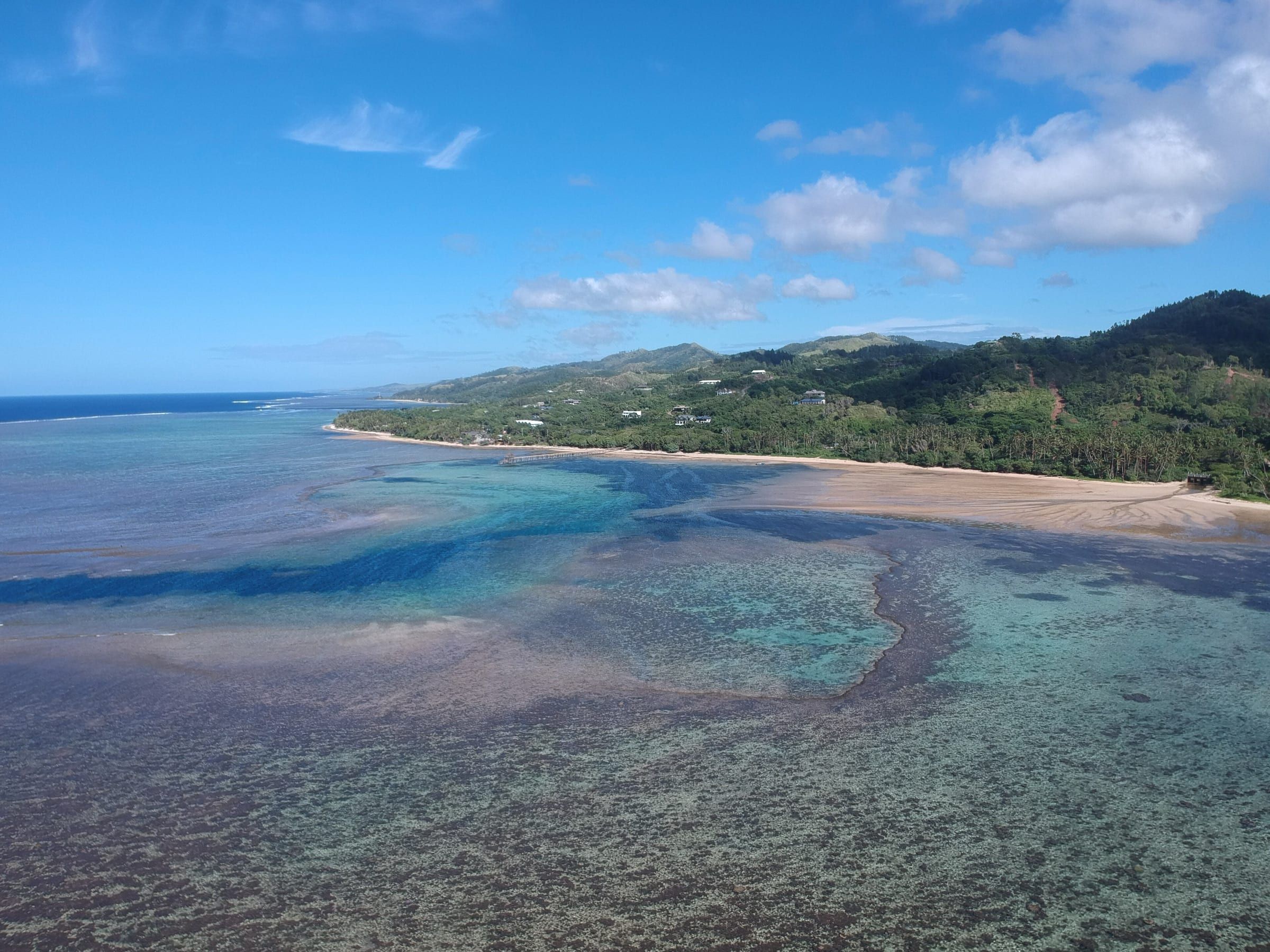

At a glance
Flights from New Zealand
- Auckland
- Direct flightAir New Zealand and Fiji Airwaysabout 3 h
- Wellington
- Direct flightFiji Airwaysabout 3 h 45 min
- Christchurch
- Direct flightFiji Airwaysabout 4 h
Typical scheduled times from each airline or operator.
- Time
- 1 hour behind NZFrom 4 April 2027: same time as NZ.From 26 September 2027: 1 hour behind NZ.
- Money
- NZ$1 ≈ FJ$1.26Fijian dollar. Mid-market rate on 13 October 2026: card and cash rates are worse.
- Entry
- No visa needed with an NZ passport.Entry rules in Know before you go
- Plugs
- Type I, the same as NZ
- Driving
- On the left, as in NZ
- Language
- English, iTaukei (Fijian) and Fiji Hindi
- Cost
- About NZ prices
- The island
- 10,673 km² of land · about 580,000 people · highest point 1,324 m
The short version
Viti Levu is Fiji’s main island, and both international airports are on it, so nearly every Fiji holiday starts here. It’s one of the easiest tropical trips from New Zealand, with non-stop flights from Auckland, Wellington and Christchurch and a long list of family resorts.
The catch is the coast near the airport. Nadi Bay and Denarau are built around pools, marinas and kids’ clubs rather than reef. Tourism Fiji’s own guide singles out the Coral Coast as the place on Viti Levu to snorkel straight off the beach. The white-sand-and-coral picture in the brochure is usually a boat ride away, in the Mamanuca or Yasawa islands. Add school-holiday crowds in July and cyclone season from November to April, and it pays to choose your coast and your month with care.
Our verdict: one of the lowest-effort family resort holidays in the Pacific. Pick Denarau for the shortest transfer and the most kids’ clubs, or the Coral Coast if you want reef and village life outside the gate.
Who Viti Levu suits
Each score is out of 5, against the other islands we cover.
Best for
- Families: 5 out of 5.Denarau and the Coral Coast are lined with resorts running kids’ clubs, and Nadi is about three hours’ flying from Auckland.
- Adventure: 4 out of 5.Shark dives in Beqa Lagoon, Upper Navua rafting, jet boats, ziplines and tandem skydives, mostly bookable as day trips.
- Culture: 4 out of 5.Village visits, Indo-Fijian temples and food, Suva’s Fiji Museum and the Hibiscus Festival in Suva.
The catch
The reef is a boat ride awayNadi Bay and Denarau are built around pools, marinas and kids’ clubs, so snorkelling a reef means a boat trip or the Coral Coast.
Show the other nine ratings
- Value for money: 4 out of 5.Frequent flights, rooms at every price from backpacker to five-star, and local meals from about FJ$10–20.
- Couples: 3 out of 5.Easy and good value, with adults-only sections at some Denarau resorts, but the main resort zones are busy and built around families.
- Honeymoons: 3 out of 5.Comfortable mainland resorts, but the more private island hideaways are a boat or seaplane ride offshore.
- Beaches: 3 out of 5.Natadola and the Coral Coast have good beaches; around Nadi the shore is better for sunsets than swimming.
- Snorkelling and diving: 3 out of 5.The Shark Reef dive is a standout, but beach snorkelling is mostly on the Coral Coast; around Nadi and Denarau it means a boat trip.
- Food and wine: 3 out of 5.Indo-Fijian curries, lovo earth-oven feasts and produce markets give real variety beyond resort menus.
- Nature: 3 out of 5.Sigatoka’s sand dunes, the Navua gorge and Colo-i-Suva rainforest, though most stays are in developed resort zones.
- Rest: 3 out of 5.Resorts make doing nothing easy, but long transfers, peak-season crowds and Nadi’s rush hour take some of the edge off.
- Luxury: 3 out of 5.Large international-chain resorts on Denarau and at Natadola; Fiji’s most exclusive private islands are elsewhere.
When to go
The dry season, May to October, is the safe bet: cooler, less rain and calmer seas on the Coral Coast. It’s also peak season. Tourism Fiji says June to August is the busiest stretch, when Australians and New Zealanders escape winter, and NZ’s July school holidays (3–18 July in 2027) land in the middle of it. Book flights and family rooms early if you’re tied to those dates. The late-September holidays (25 September to 10 October in 2027) are dry-season too, but outside the June to August rush.
November to April is the hot, humid wet season, and it’s also tropical cyclone season, which SafeTravel flags for Fiji. Expect short bursts of rain and stickier days; Tourism Fiji pitches this as the time for off-season deals, although there’s a smaller peak over Christmas and New Year. Follow local advice if a cyclone forms. The west, where Nadi and Denarau sit, is the drier side of the island. Suva and the east are noticeably wetter.
A few events are worth timing a trip around, though dates shift each year. The Coral Coast Sevens rugby is held in Sigatoka in January (15–17 January in 2026), Nadi’s Bula Festival ran for about a week from mid-July in 2026, and Suva’s Hibiscus Festival, which Tourism Fiji calls the country’s largest cultural festival, was scheduled for 29 August to 5 September. Check Tourism Fiji’s events page for the next dates.
Best from June to OctoberHighest score 97 (excellent) in September; lowest 51 (fair) in January.
Show the numbers
| Month | Score | Rating | Air high °C | Air low °C | Sea °C | Rain mm | Cyclones within 200 km |
|---|---|---|---|---|---|---|---|
| January | 51 | Fair | 31 | 23 | 29 | 372 | 3 in 30 seasons |
| February | 52 | Fair | 32 | 23 | 29 | 335 | 3 in 30 seasons |
| March | 55 | Fair | 31 | 23 | 29 | 348 | 1 in 30 seasons |
| April | 69 | Good | 31 | 23 | 29 | 193 | 3 in 30 seasons |
| May | 86 | Excellent | 30 | 21 | 28 | 94 | 1 in 30 seasons |
| June (best months) | 92 | Excellent | 29 | 20 | 27 | 59 | none in 30 |
| July (best months) | 96 | Excellent | 29 | 19 | 27 | 53 | none in 30 |
| August (best months) | 96 | Excellent | 29 | 20 | 26 | 60 | none in 30 |
| September (best months) | 97 | Excellent | 29 | 21 | 26 | 74 | none in 30 |
| October (best months) | 95 | Excellent | 30 | 22 | 27 | 89 | none in 30 |
| November | 85 | Excellent | 31 | 22 | 28 | 126 | none in 30 |
| December | 65 | Good | 31 | 23 | 28 | 211 | 4 in 30 seasons |
NZ school holidays shown, 16 October 2026 to 15 October 2027: 19 December 2026 to 27 January 2027; 10–26 April 2027; 3–18 July 2027; 25 September to 10 October 2027.
Where to stay
Your base shapes the whole trip, because the drive from Nadi airport ranges from a few minutes to more than three hours. Tourism Fiji advises sticking to one region, or two at most, so choose the stretch of coast that fits your group rather than trying to see the whole island.
© OpenStreetMap contributors
Denarau Island
A resort enclave 20 minutes from Nadi airport, with nine family-friendly resorts, kids’ clubs, golf and Port Denarau marina for island day trips. Easy and self-contained; the catch is that reef snorkelling means a boat trip, and taxis off the island cost more.
Best for
See stays in Denarau Island, on Booking.com (opens in a new tab)
Coral Coast
Resorts strung along the south coast, 30 minutes to two hours from the airport, behind a fringing reef where, unlike Nadi and Denarau, you can snorkel from the shore. Natadola Beach, Sigatoka town and the sand dunes are close; the longer transfer is the trade-off.
Best for
See stays on the Coral Coast, on Booking.com (opens in a new tab)
Wailoaloa and Martintar, Nadi
Budget hotels, serviced suites, bars and restaurants on Nadi Bay, close to the airport. Good for a first or last night or a cheap base; Wailoaloa Beach is better for sunsets and socialising than for swimming.
Best for
See stays in Wailoaloa and Martintar, Nadi, on Booking.com (opens in a new tab)
Pacific Harbour
Known as Fiji’s adventure capital, about 2.5 hours from Nadi on the south coast. Base yourself here for shark dives in Beqa Lagoon and trips up the Navua River; there are budget options as well as resorts.
Best for
See stays in Pacific Harbour, on Booking.com (opens in a new tab)
Suva
The capital, about 3.5 hours by road or a 30-minute flight from Nadi, with the Fiji Museum, the Municipal Market and Colo-i-Suva rainforest close by. A city stay rather than a beach holiday, and wetter than the west.
Best for
Things to do
Viti Levu is best for easy day trips from a resort base: an island cruise, a river safari, a mud-pool soak or a shark dive.
Mamanuca island day trip from Port Denarau
Day cruises leave Port Denarau for small islands, floating bars and reef snorkelling in the Mamanucas. It’s the easiest way to get the white-sand-and-coral day that the shore around Nadi can’t offer.
Find tours: Mamanuca island day trip from Port Denarau, on GetYourGuide (opens in a new tab)
Natadola Beach
A reef-protected beach on the Coral Coast, about an hour from Nadi airport, that Tourism Fiji hails as Viti Levu’s best. Snorkel or paddleboard off the reef, look for tide pools at low tide or take a learn-to-surf lesson.
Shark Reef Marine Reserve, Beqa Lagoon
A dive site 15 minutes by boat from Pacific Harbour where divers meet up to eight shark species. It became Fiji’s first national marine park in 2014, and each diver pays a levy to Galoa village, the reef’s traditional owners. Check your insurance covers diving.
Find tours: Shark Reef Marine Reserve, Beqa Lagoon, on GetYourGuide (opens in a new tab)
Sigatoka River Safari
Jet boats run up the Sigatoka River into the interior, with a village visit on the way. The community-based operator says it partners with 18 villages, so it doubles as a guided first village visit.
Find tours: Sigatoka River Safari, on GetYourGuide (opens in a new tab)
Sigatoka Sand Dunes National Park
Fiji’s first national park, at the mouth of the Sigatoka River, with trails over the dunes and a settlement site dating back about 2,600 years. There’s very little shade, so go early or late in the day.
Sabeto mud pools and orchid garden
At Sabeto, near Nadi, coat yourself in mud and rinse off in warm geothermal pools (open daily, 9am–5pm). Nearby, a garden at the foot of the Sleeping Giant mountain holds more than 2,000 orchids.
Find tours: Sabeto mud pools and orchid garden, on GetYourGuide (opens in a new tab)
Upper Navua River rafting
Grade II–III rapids through a rainforest slot canyon in the highlands behind Pacific Harbour. Trips take children aged eight and over, and gentler river-tubing trips run on the Navua too.
Find tours: Upper Navua River rafting, on GetYourGuide (opens in a new tab)
Sri Siva Subramaniya Temple, Nadi
A brightly painted Hindu temple at the south end of Nadi town and a window into Indo-Fijian culture. Guided visits run every half hour from 8.30am to 3pm for a small fee; dress modestly, remove your shoes and photograph only the outside.
Partner links: we may earn a commission. It never changes our verdicts. They go to GetYourGuide. How we make money
Getting there
Nearly all international flights land at Nadi International Airport (NAN) on the west coast; a smaller number use Nausori Airport near Suva. From Auckland, Air New Zealand flies non-stop to Nadi daily. Tourism Fiji’s schedule summary adds Fiji Airways non-stop flights from Auckland (10–15 a week, about three hours), Wellington (about three a week, around 3 hours 45 minutes) and Christchurch (about four a week, around four hours). Frequencies change between low and peak season, so check before booking. Air New Zealand connects travellers from its other NZ airports through Auckland.
From Nadi airport, Denarau is about 20 minutes by road and the Coral Coast 30 minutes to two hours. Pacific Harbour is about 2.5 hours away. Suva is about 3.5 hours by road, or a 30-minute domestic flight to Nausori. Most hotels arrange transfers if you email your flight details; some include them and others charge. If you land late or face a long transfer, Tourism Fiji suggests a night in Nadi first.
Getting around
You can manage without a car: resort transfers, taxis and tours cover most of what visitors do. On Denarau, a shuttle bus loops the resorts and Port Denarau every 10–15 minutes, and a local bus runs into Nadi town. E-bike and electric-scooter hire is also on offer around Nadi.
Taxis wait outside arrivals at Nadi airport, with fares from FJ$7 for short hops to Nadi, Denarau or Lautoka. On the street, LT plates mean a metered taxi, while LH taxis charge fixed rates by distance, so agree the fare first. Carry Fiji dollars and check the meter is on. Uber and similar ride-share apps don’t operate in Fiji.
Inter-city buses along the Queens Road are cheap and slow: one to four hours to the Coral Coast, Pacific Harbour or Suva, for up to about FJ$20 one way. They stop outside the airport departures terminal and use prepaid cards sold by the bus checkers.
Driving will feel familiar, because Fiji drives on the left. Rental desks sit just outside arrivals, and as of October 2026 you need a valid English-language licence (a standard NZ licence qualifies) and a credit card. Rental firms generally want drivers aged 21 or over and take a bond. Speed limits are 80km/h on highways and 50km/h or lower in towns and villages, seatbelts are compulsory and hand-held phones are illegal. Expect potholes, wandering animals and patchy mobile coverage in remote areas, and avoid night driving where you can.
Nadi to Suva is about 190km and 3–4 hours on the south-coast Queens Road; the northern Kings Road is about 283km, takes 4–5 hours and has fewer fuel stations.
Money
Fiji uses the Fijian dollar (FJD), with notes of $5, $7, $10, $20, $50 and $100. Visa and Mastercard are widely accepted at resorts, larger restaurants and in tourist areas, but usually carry a surcharge of about 3%. Taxis, buses, markets, village stalls and small shops want cash.
ATMs are at Nadi airport, Namaka, Martintar, Denarau and Nadi town, and Tourism Fiji says withdrawals of up to FJ$2,000 a day are possible (your own bank’s limit may be lower). They thin out quickly beyond the main towns. SafeTravel warns of credit card fraud, so take care at ATMs and when paying by card. Tourism Fiji recommends changing money in Fiji rather than at home; there are 24-hour exchange booths in the arrivals hall.
Tipping isn’t expected, although it’s appreciated for exceptional service. Many resorts run a staff Christmas or community fund you can add to instead. Eating outside your resort saves money: a hearty meal at a local restaurant costs from about FJ$10–20.
Know before you go
Entry. As of October 2026, New Zealand passport holders are visa-exempt and receive a visitor permit on arrival for up to four months, according to Fiji’s Ministry of Immigration. Tourism Fiji lists the documents to carry: a passport valid for at least six months beyond your stay, a return or onward ticket, a confirmed address in Fiji such as your hotel, and a completed arrival card. The Ministry’s page mentions only a valid passport, so confirm the six-month rule with your airline.
Health. Tourism Fiji says Fiji is free of malaria and yellow fever, but dengue fever occurs. In 2025, Ministry of Health figures reported by FBC News showed 10,969 cases by mid-June, the most (4,960) in the Western Division around Nadi. Dengue mosquitoes bite mainly during the day, so use repellent and cover up.
If you fall ill during your trip or within three weeks of getting home, see a doctor, mention your travel and use paracetamol rather than ibuprofen or aspirin (SafeTravel). Tap water is treated in Nadi and Suva, but resorts and SafeTravel’s Pacific health advice both point to bottled or boiled water. SafeTravel recommends comprehensive travel insurance that covers medical evacuation by air.
Ocean safety. Most beaches have no lifeguards. Ask resort staff where to swim, keep away from reef gaps and boat channels where currents are stronger, and never cross a flooded river. Coral cuts can infect easily in the humid weather, so clean them straight away. For boat trips, check the operator holds a Maritime Safety Authority of Fiji (MSAF) licence and carries lifejackets, and that your insurance covers boating and diving.
Crime. SafeTravel advises normal safety and security precautions, while noting concerns are greater than in New Zealand. Theft and assault are a worry, particularly at night, so keep valuables close and avoid poorly lit areas and walking alone. Passports and bags have been stolen at Nadi airport, so keep them with you.
Sundays and customs. Sunday is for church, family and rest. Resorts and tours keep running, but many shops, banks and restaurants close or cut their hours, and village visits usually don’t operate. If you visit a village, go with a local guide, cover your shoulders and knees, take off your hat and sunglasses, remove your shoes indoors and ask before taking photos. Guests customarily present kava to the chief in a sevusevu welcome, and touching someone’s head is considered disrespectful.
Power and connectivity. Sockets are the same Type I, 240V plugs used in New Zealand, so you won’t need an adaptor. Vodafone Fiji sells a tourist SIM at its Nadi airport outlet (bring your physical passport) and a tourist eSIM you can buy before you fly.
With kids. Resort kids’ clubs typically take children aged 3–10, and many resorts offer nannies or babysitting. Pack a small first-aid kit and reef-safe sunscreen. Pharmacies are easy to find in Nadi and other main towns but thin out in remote areas.
What things cost
Prices from the sources below, in the currency they were quoted in and dated. They change, so treat them as a guide.
| What | Price |
|---|---|
| Inter-city bus, Nadi to the Coral Coast or SuvaTourism Fiji; trips take one to four hours. | Up to about FJ$20 one way (October 2026) |
| Taxi from Nadi airport, short tripTo Nadi, Denarau or Lautoka; pay in Fiji dollars. | From FJ$7 (October 2026) |
| Metered taxi base fare (LT plates) | FJ$2.50 (October 2026) |
| Meal at a local restaurantResort restaurants cost more. | About FJ$10–20 (October 2026) |
| Card surchargeCommonly added to Visa and Mastercard payments. | About 3% (October 2026) |
| ATM withdrawal limitTourism Fiji’s figure for Nadi ATMs; your own bank’s limit may be lower. | Up to FJ$2,000 a day (October 2026) |
Questions people ask
Do New Zealanders need a visa for Fiji?
No. At the time of writing, NZ passport holders are visa-exempt and receive a visitor permit on arrival allowing a stay of up to four months, according to Fiji’s Ministry of Immigration. Tourism Fiji lists a passport valid for at least six months beyond your stay, a return or onward ticket and a confirmed address in Fiji as the documents to carry.
What is the best time of year to visit Viti Levu?
May to October is the dry season, with cooler, less rainy weather and calmer seas on the Coral Coast. It’s also peak season, busiest from June to August when Australians and New Zealanders escape winter. November to April is hotter, wetter and cyclone season, but Tourism Fiji points to off-season deals on flights and rooms.
Is Denarau or the Coral Coast better for families?
Denarau wins on convenience: it’s 20 minutes from Nadi airport, most resorts have kids’ clubs and there’s a waterpark on the island. The Coral Coast is 30 minutes to two hours away but has a fringing reef you can snorkel from the beach, plus the sand dunes and river safaris nearby. Our pick for toddlers is Denarau; for school-age kids who swim, the Coral Coast.
Should I bring cash or use a card in Fiji?
Both. Visa and Mastercard work at resorts and larger restaurants but usually carry a surcharge of about 3%. Taxis, buses, markets and small shops want Fijian dollars. ATMs are at Nadi airport, Denarau and Nadi town, but they thin out quickly beyond the main towns.
How do I get from Nadi Airport to my hotel?
Most hotels arrange transfers if you send your flight details; some are free and others charge. Yellow taxis outside arrivals start from about FJ$7 for short trips to Nadi or Denarau, and inter-city buses to the Coral Coast and Suva stop outside the departures terminal. Uber and other ride-share apps don’t operate in Fiji.
How many days do I need on Viti Levu?
A week suits one base plus two or three day trips, such as a Mamanuca island cruise and a river safari. Tourism Fiji advises sticking to one region, or two at most, because transfers take longer than the map suggests. If you land late, a night near Nadi airport makes the first day easier.
Compare Viti Levu with
- Mamanuca Islands
Reef-sheltered resorts a short boat ride from Nadi: Fiji’s easiest island escape, priced like resorts and sometimes reached with wet feet.
Best May–OctAbout 4 h 45 min from Auckland (fly to Nadi, then ferry)Above NZ prices
- Rarotonga
The easiest tropical island from NZ: under four hours from Auckland, NZ dollars, 90 days on arrival. Just don’t expect bargains.
Best May–NovAbout 4 h from Auckland (direct)About NZ prices
- Upolu
Living Samoan culture, south-coast beaches and cheap beach fales, under four hours from Auckland. Sundays need working around.
Best Jun–SepAbout 4 h from Auckland (direct)About NZ prices
Island outlines © OpenStreetMap contributors
Sources
Last checked
Every fact on this page comes from one of these. Rules and prices change, so check the official source before you book. All 46 were read on .
- SafeTravel: Fiji travel advice
- SafeTravel: Dengue fever outbreak in the Pacific
- Fiji Ministry of Immigration: Visa exempted countries
- Fiji Ministry of Immigration: Visit Fiji (visitor permits)
- Tourism Fiji: Visas and entry requirements
- Tourism Fiji: How to get to Fiji
- Air New Zealand: Flights to Fiji
- Tourism Fiji: Getting around by land and airport transfers
- Tourism Fiji: Road safety tips for drivers
- Tourism Fiji: Nadi travel tips
- Tourism Fiji: Best areas to stay in Nadi
- Tourism Fiji: Top things to do in Nadi
- Tourism Fiji: Denarau Island
- Tourism Fiji: Coral Coast
- Tourism Fiji: Top things to do on the Coral Coast
- Tourism Fiji: Natadola Beach
- Tourism Fiji: Sigatoka Sand Dunes National Park
- Tourism Fiji: Pacific Harbour
- Tourism Fiji: Diving with sharks in Fiji’s first national marine park
- Tourism Fiji: Suva and surrounds
- Tourism Fiji: Fiji Museum
- Tourism Fiji: Colo-i-Suva Forest Park
- Tourism Fiji: Weather in Fiji
- Tourism Fiji: Common mistakes first-time visitors make
- Tourism Fiji: 10 etiquette tips for visiting a Fijian village
- Tourism Fiji: Health and hospitals
- Tourism Fiji: Water safety
- Tourism Fiji: Is tap water safe to drink in Fiji?
- Tourism Fiji: Top tips for visiting Fiji with kids
- Tourism Fiji: Adventures for families with teenagers
- Tourism Fiji: Best public beaches on Viti Levu
- Tourism Fiji: 14 things to do in Fiji on a budget
- Tourism Fiji: First trip to Fiji
- Tourism Fiji: FAQs
- Tourism Fiji: Events
- Tourism Fiji: Hibiscus Festival
- FBC News: Hibiscus Festival returns to Albert Park
- Fiji Times: Bula Festival kicks off
- Fiji Times: Local getaways, warmth and hospitality
- FBC News: Dengue claims 8 lives, 10,969 cases recorded
- Vodafone Fiji: Tourist SIM
- Vodafone Fiji: Tourist eSIM FAQs
- NZ Gazette: 2027 and 2028 school term dates
- Beqa Adventure Divers: Shark Reef Marine Reserve
- Sigatoka River Safari
- Rivers Fiji: Upper Navua River rafting
Show all 46 sourcesShow the first 8 only
Data behind the charts
- Climate
- Meteostat weather-station normals (CC BY 4.0) and NASA POWER model data.
- Sea temperature
- NOAA OISST v2.1, 1991–2020 monthly means (NOAA PSL).
- Cyclones
- IBTrACS v04r01 storm tracks, 1991–2020 (NOAA NCEI).
- Flight and ferry times
- Airline, operator and tourism-board pages: fiji.travel, airnewzealand.co.nz
- School holidays
- Ministry of Education term dates. education.govt.nz
- Exchange rate
- Frankfurter (European Central Bank and other central banks).
- Island facts
- Wikidata (CC0).
- Outline map
- © OpenStreetMap contributors (ODbL).