Tiritiri Matangi
A predator-free bird sanctuary 80 minutes by ferry from Auckland: rare birds up close, a Wednesday-to-Sunday ferry and no food for sale.
January, this month96/100February, this month93/100March, this month87/100April, this month74/100May, this month53/100June, this month39/100July, this month32/100August, this month42/100September, this month57/100October, this month70/100November, this month89/100December, this month95/100
How the score works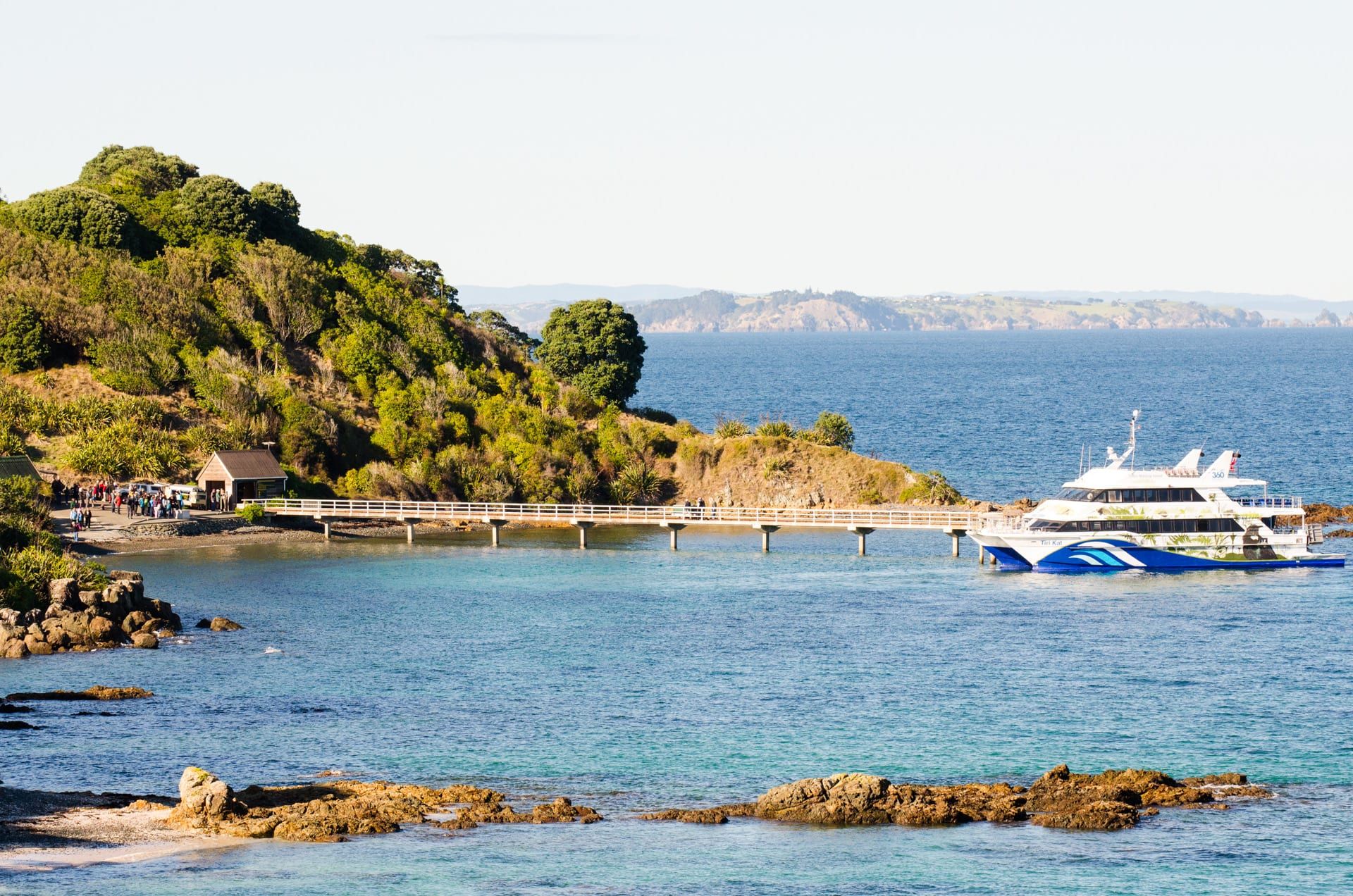

At a glance
Getting there from New Zealand
- Auckland
- FerryExploreabout 1 h 15 min
- Wellington
- Fly to Auckland, then ferryAir New Zealand and Exploreabout 3 h 15 min
- Christchurch
- Fly to Auckland, then ferryAir New Zealand and Exploreabout 3 h 45 min
Typical scheduled times from each airline or operator. With a change, we allow 1 h 30 min to change planes and 1 h to get from an airport to a boat or onward flight.
- Time
- Same time as NZ
- Money
- NZ dollarsThe same money as at home, so nothing to change.
- Entry
- No visa needed with an NZ passport.Entry rules in Know before you go
- Plugs
- Type I, the same as NZ
- Driving
- On the left, as in NZ
- Language
- English and te reo Māori
- Cost
- About NZ prices
- The island
- 1.9 km² of land · highest point 80 m
The short version
Tiritiri Matangi is a predator-free island in the Hauraki Gulf, run by DOC with the volunteer group Supporters of Tiritiri Matangi. It is one of the few places near Auckland where you can see takahē, kōkako, tīeke (saddleback) and hihi (stitchbird) living wild. It is a day trip, or a night in a shared bunkhouse, not a resort stay.
It suits birdwatchers, families with children old enough to walk steep tracks, and anyone who likes their holiday to be a walk with a purpose. It does not suit people who want a beach day, a café lunch or a lie-in.
The catch is logistics. The public ferry runs only Wednesday to Sunday, it fills well ahead in summer, no food is sold on the island, and there are no bins. Our verdict: the best wildlife day out from Auckland, as long as you book early and pack properly.
Who Tiritiri Matangi suits
Each score is out of 5, against the other islands we cover.
Best for
- Nature: 5 out of 5.Takahē, kōkako, tīeke and hihi live wild here, with little spotted kiwi and tuatara on night walks.
- Families: 3 out of 5.The Wattle Track takes about 30 minutes and suits buggies, but tracks elsewhere are steep and nothing is sold to eat.
- Rest: 3 out of 5.Quiet once the day ferry leaves, though the walking is steep and there are no shops or bins.
The catch
Ferry daysThe public ferry runs only Wednesday to Sunday and fills well ahead in summer, and no food is sold on the island.
Show the other nine ratings
- Value for money: 3 out of 5.NZ$110 per adult return buys a full day with rare wildlife, but food and any guided walk are extra.
- Couples: 2 out of 5.Bird walks and a lighthouse lookout make a good day for two, but nothing is sold to eat and the only bed is a shared bunkhouse.
- Adventure: 2 out of 5.Steep, stepped tracks and a long walking day, but nothing technical and no activities beyond walking and swimming.
- Beaches: 2 out of 5.Hobbs Beach is sandy, shallow and 10 minutes from the wharf, but it is a picnic stop rather than a beach holiday.
- Snorkelling and diving: 2 out of 5.Snorkelling is possible off the rocks at Hobbs Beach and on the eastern side, so bring your own gear.
- Culture: 2 out of 5.A lighthouse shipped from England in 1864, a small maritime museum and volunteer guides explaining the island’s restoration.
- Honeymoons: 1 out of 5.No hotel, restaurant or private rooms: the only bed is a shared bunkhouse.
- Food and wine: 0 out of 5.No food is sold on the island, so you carry in everything you eat.
- Luxury: 0 out of 5.There is no luxury accommodation, dining or spa: the bunkhouse is basic and shared.
When to go
The island is open all year, and the ferry runs on its five days in every season. Auckland’s summer is the warmest and most settled stretch, winter is cooler, wetter and windier, and spring can give sun, wind and showers in one day. Bring a raincoat whatever the forecast, because the Supporters say there are no shelters on the tracks.
DOC says the ferry can fill well in advance from November to April, with a summer peak timetable from 26 December to the third weekend of January. Book early for that period and for school holidays. The 2027 term breaks fall on 10–26 April, 3–18 July and 25 September–10 October.
Birds suit different seasons. Spring is when Explore runs its dawn chorus trips: this year’s were on 3 and 10 October, so check for next year’s dates. Korimako (bellbirds) sing loudly around the flowering wattles in winter, and winter is also when the bunkhouse is easier to book. The weather can cancel boats, so keep your plans flexible.
Best from November to MarchHighest score 96 (excellent) in January; lowest 32 (poor) in July.
Show the numbers
| Month | Score | Rating | Air high °C | Air low °C | Sea °C | Rain mm |
|---|---|---|---|---|---|---|
| January (best months) | 96 | Excellent | 24 | 15 | 20 | 70 |
| February (best months) | 93 | Excellent | 24 | 16 | 21 | 66 |
| March (best months) | 87 | Excellent | 23 | 15 | 21 | 65 |
| April | 74 | Good | 21 | 13 | 19 | 86 |
| May | 53 | Fair | 18 | 11 | 18 | 112 |
| June | 39 | Poor | 16 | 9 | 16 | 108 |
| July | 32 | Poor | 15 | 9 | 14 | 122 |
| August | 42 | Poor | 16 | 9 | 14 | 94 |
| September | 57 | Fair | 17 | 10 | 14 | 85 |
| October | 70 | Good | 18 | 11 | 15 | 77 |
| November (best months) | 89 | Excellent | 20 | 12 | 17 | 59 |
| December (best months) | 95 | Excellent | 22 | 14 | 19 | 74 |
NZ school holidays shown, 16 October 2026 to 15 October 2027: 19 December 2026 to 27 January 2027; 10–26 April 2027; 3–18 July 2027; 25 September to 10 October 2027.
Where to stay
Most people stay on the mainland and visit for the day, so the choice is where you board. The ferry leaves from Viaduct Harbour in central Auckland and stops at Gulf Harbour on the way. The only bed on the island is the DOC bunkhouse.
© OpenStreetMap contributors
On the mainland, not marked here: 1 Viaduct Harbour, Auckland and 2 Gulf Harbour, Whangaparāoa.
Viaduct Harbour, Auckland
Where the Explore ferry leaves from, on the central Auckland waterfront. Stay here the night before for a stress-free 9am or 8.30am sailing, with hotels and restaurants within walking distance.
Best for
See stays in Viaduct Harbour, Auckland, on Booking.com (opens in a new tab)
Gulf Harbour, Whangaparāoa
The ferry stops here on the way out and back, 25 minutes from the island. A handy alternative if you are driving from the north and want to skip the Auckland leg of the journey.
Best for
See stays in Gulf Harbour, Whangaparāoa, on Booking.com (opens in a new tab)
The island bunkhouse
Fifteen bunks in three rooms in the former lighthouse keeper’s cottage, booked through DOC and often full months ahead. You bring bedding and food, and get the island after the day visitors leave.
Best for
See stays on the island bunkhouse, on Booking.com (opens in a new tab)
Things to do
Tiritiri Matangi is best for walking slowly and looking up. Build the day around one track, a guided walk if you can get a place, a swim at Hobbs Beach and the lighthouse, and leave time for the birds to find you.
Wattle Track to the lighthouse
The easiest way up from the wharf takes about 30 minutes, with three rest spots, two of them with bird baths. It suits buggies, young children and anyone who wants birds without a big climb.
Guided walk
Small-group walks led by guides explain the island’s history and wildlife, and spaces are limited. Book with your ferry ticket; kids can collect a Kiwi Ranger booklet from guides.
Find tours: Guided walk, on GetYourGuide (opens in a new tab)
Takahē and kōkako
Takahē feed mainly around the lighthouse and the northern end, and kōkako are heard before they are seen. Keep to the tracks and never play bird calls to lure them.
Lighthouse and visitor centre
The lighthouse was shipped from England in 1864 and is described as the oldest working lighthouse in New Zealand. The visitor centre next door has displays and a small maritime museum.
Hobbs Beach
A sandy beach about 10 minutes’ walk from the wharf, shallow enough for family swimming. Keep clear of nesting dotterel, and expect to carry everything in and out.
Kawarau Track
A longer walk of about an hour and a half, with steps and steep sections. The family guide suggests children from about six can manage it.
Dawn chorus trip
Explore runs special early sailings in spring, leaving Auckland at 4am to reach the island by 5.20am. The 2026 dates were 3 and 10 October; boat numbers are strictly limited, so check for next year.
Find tours: Dawn chorus trip, on GetYourGuide (opens in a new tab)
Night walk from the bunkhouse
Overnight guests can look for little spotted kiwi, little penguins (kororā) and tuatara after dark. Bring a torch, and expect rare birds to be more active once the day visitors leave.
Partner links: we may earn a commission. It never changes our verdicts. They go to GetYourGuide. How we make money
Getting there
Everything goes through Auckland. Air New Zealand flies Wellington to Auckland non-stop in about 65 minutes with up to 14 flights a day, and Christchurch to Auckland in about 85 minutes with more than 10 flights a day. Allow a night in Auckland before an early sailing.
Explore Group runs the public ferry from Viaduct Harbour, Wednesday to Sunday. On Wednesday to Friday it leaves at 9am, calls at Gulf Harbour at 9.55am and reaches the island at 10.20am. The return leaves at 2.40pm and reaches Auckland at 4pm. On Saturdays, Sundays and public holidays it leaves at 8.30am, arrives at 9.50am and leaves the island at 4pm and reaches Auckland at 5.20pm, which gives about six hours ashore. Auckland to the island takes about 80 minutes, and Gulf Harbour is 25 minutes from the island. These are the times at the time of writing, so confirm on booking.
An adult return costs NZ$110, a child (5–15) NZ$55 and under-fives travel free. A family pass for two adults and two children is NZ$275. Guided walks are an extra charge that Explore lists at different amounts on different pages, so confirm when you book. If you plan to stay overnight, you book the ferry separately with Explore and the bunkhouse with DOC.
Getting around
You walk. Bicycles, scooters and skateboards are banned. Many tracks are steep, and some have steps. Pushchairs can ride on a utility vehicle from the wharf to the lighthouse, and the Wattle Track is the buggy-friendly route.
Eastern tracks are steeper and more exposed, with wide views over the Gulf. The western bush is denser, with a lower canopy and better chances of close encounters with birds. Stay on the marked tracks, because the “bush tracks” are for researchers and monitoring.
Money
The island has no shops selling food and no public phone, so there is little to spend on once you are there. The visitor centre shop sells gifts and cold drinks, and the ferry has a café selling sandwiches and snacks. We could not confirm how payment works on the island, so carry some cash as a backup.
Your main costs are the ferry, any guided walk and your own food.
Know before you go
New Zealand citizens do not need a visa to enter New Zealand, and New Zealand passport holders do not need an NZeTA. This is a domestic trip, so there are no border checks beyond the island’s own biosecurity rules.
Biosecurity is the part that surprises people. DOC asks you to check your bags and shoes for rodents, ants and skinks, scrub soil and seeds off your footwear, zip your bags and carry food in sealed containers, never open or supermarket bags. You can scrub shoes at the pier before boarding. Overnight guests must hand a completed biosecurity checklist to a ranger on arrival. Dogs and other pets are not allowed.
Take everything out with you, because there are no rubbish bins. No fires, no barbecues, no camping and no collecting of plants, rocks or wildlife. Do not play bird calls or feed the birds. Toilets are at the wharf, Hobbs Beach and the lighthouse area.
Bring a raincoat, sun protection, water, lunch and a snack. A phone will not do much for you: there is no public phone, mobile coverage is good on the grass outside the bunkhouse but patchy elsewhere, and rangers live on the island for emergencies. Hobbs Beach is shallow and suits families. The northern sandy beach is hard to reach and its rocks can be dangerous for inexperienced swimmers.
For official updates, see the DOC page for Tiritiri Matangi.
What things cost
Prices from the sources below, in the currency they were quoted in and dated. They change, so treat them as a guide.
| What | Price |
|---|---|
| Ferry from Auckland, adult (16+)Child (5–15) NZ$55; under 5 free. | NZ$110 return (October 2026) |
| Family pass, 2 adults and 2 children | NZ$275 return (October 2026) |
| Guided walk add-onExplore’s pages list different prices; confirm at booking. | NZ$10–15 adult, NZ$2.50–5 child (October 2026) |
| Dawn chorus tripIncludes tea, coffee and biscuits at the visitor centre. | NZ$140 adult, NZ$85 child (2026 season) |
Questions people ask
Do I need a visa for Tiritiri Matangi?
No, not if you are a New Zealand citizen. Immigration New Zealand lists New Zealand passport holders among travellers who do not need an NZeTA, and Australian citizens need neither a visa nor an NZeTA. Other overseas visitors should check the immigration site before travelling.
Which days does the ferry run?
Explore Group’s public ferry runs Wednesday to Sunday. As of October 2026 it leaves Viaduct Harbour at 9am Wednesday to Friday and 8.30am on weekends and public holidays. There is no public ferry on Mondays or Tuesdays, so plan around that.
Can I take my dog or my own lunch to Tiritiri Matangi?
No dogs, bicycles, scooters or skateboards are allowed. Bring your own food in a sealed container, because none is sold on the island, and pack out all rubbish since there are no bins. Check your bags and shoes for pests before boarding.
Is Tiritiri Matangi good for kids?
Yes, with planning. The Wattle Track takes about 30 minutes and mountain buggies can use it, and Hobbs Beach is shallow for swimming. Other tracks are steep with steps, and there is no food for sale, so pack lunch, water and a raincoat.
Can I stay overnight on Tiritiri Matangi?
Yes, but only in the DOC bunkhouse, which has 15 bunks and is often booked months ahead. You book the bunkhouse with DOC and the ferry separately with Explore. Camping is not allowed. Bring bedding, food in rodent-proof containers and a torch.
Compare Tiritiri Matangi with
- Chatham Islands
Two hours from the mainland and no passport needed, but one airline, few beds and unsealed roads. Plan it early.
Best Dec–FebAbout 2 h 15 min from Auckland (direct)Above NZ prices
- Aotea Great Barrier Island
Off-grid, uncrowded and 30 minutes from Auckland by air. Just plan your transport and supplies before you land.
Best Dec–FebAbout 30 min from Auckland (direct)About NZ prices
- Kāpiti Island
A predator-free bird sanctuary 20 minutes off Paraparaumu Beach. Book the night if you want kiwi, and keep plans loose for the sea.
Best Jan–FebAbout 2 h 30 min from Auckland (fly to Wellington, then ferry)About NZ prices
Island outlines © OpenStreetMap contributors
Sources
Last checked
Every fact on this page comes from one of these. Rules and prices change, so check the official source before you book. All 16 were read on .
- Department of Conservation: Tiritiri Matangi Island
- Department of Conservation: Tiritiri Matangi things to do
- Department of Conservation: visiting pest-free islands
- Supporters of Tiritiri Matangi
- Supporters of Tiritiri Matangi: plan your trip
- Supporters of Tiritiri Matangi: overnight stays
- Supporters of Tiritiri Matangi: family survival guide
- Supporters of Tiritiri Matangi: wildlife
- Explore Group: Tiritiri Matangi Island ferry from Auckland
- Explore Group: things to do at Tiritiri Matangi Island
- Explore Group: Tiritiri Matangi dawn chorus
- Immigration New Zealand: travellers who do not need an NZeTA
- Auckland Tourism, Events and Economic Development: Auckland seasons
- Air New Zealand: flights from Wellington to Auckland
- Air New Zealand: flights from Christchurch to Auckland
- Ministry of Education: school terms and holidays dates
Show all 16 sourcesShow the first 8 only
Data behind the charts
- Climate
- Meteostat weather-station normals (CC BY 4.0) and NASA POWER model data.
- Sea temperature
- NOAA OISST v2.1, 1991–2020 monthly means (NOAA PSL).
- Flight and ferry times
- Airline, operator and tourism-board pages: exploregroup.co.nz, airnewzealand.co.nz
- School holidays
- Ministry of Education term dates. education.govt.nz
- Island facts
- Wikidata (CC0).
- Outline map
- © OpenStreetMap contributors (ODbL).