Savaiʻi
The biggest, quietest island in Samoa: lava fields, beach fales and village life, for travellers happy with a ferry, cash and still Sundays.
January, this month51/100February, this month53/100March, this month72/100April, this month76/100May, this month80/100June, this month89/100July, this month93/100August, this month96/100September, this month92/100October, this month82/100November, this month71/100December, this month63/100
How the score works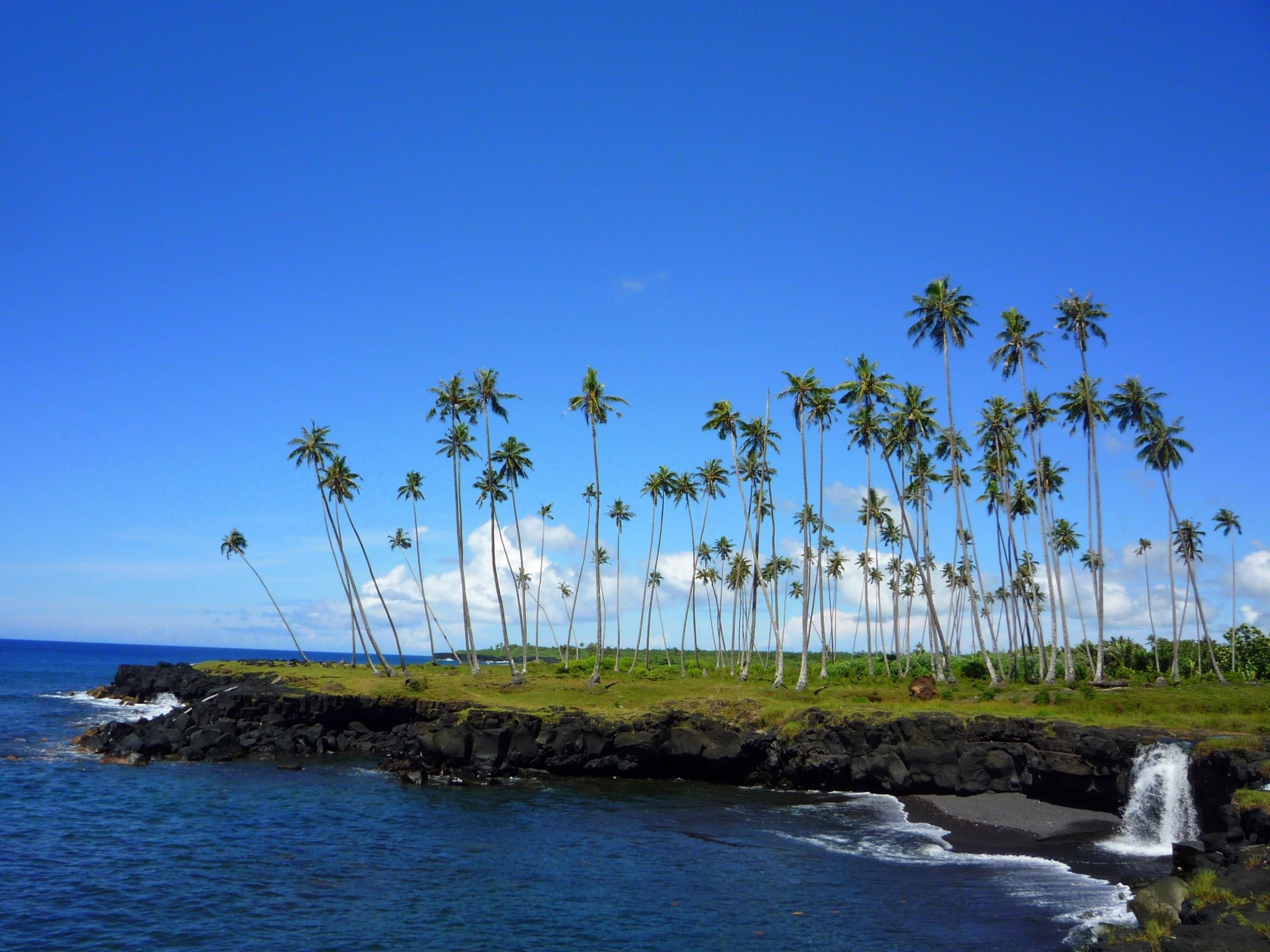

At a glance
Flights from New Zealand
- Auckland
- Fly to Apia, then ferryAir New Zealand and Samoa Shipping Corporationabout 6 h 15 min
- Wellington
- Fly via Auckland to Apia, then ferryAir New Zealand and Samoa Shipping Corporationabout 8 h 45 min
- Christchurch
- Fly via Auckland to Apia, then ferryAir New Zealand and Samoa Shipping Corporationabout 9 h 15 min
Typical scheduled times from each airline or operator. With a change, we allow 1 h 30 min to change planes and 1 h to get from an airport to a boat or onward flight.
- Time
- Same time as NZFrom 4 April 2027: 1 hour ahead of NZ.From 26 September 2027: same time as NZ.
- Money
- NZ$1 ≈ ST$1.55Samoan tala. Mid-market rate on 13 October 2026: card and cash rates are worse.
- Entry
- No visa needed with an NZ passport.Entry rules in Know before you go
- Plugs
- Type I, the same as NZ
- Driving
- On the left, as in NZ
- Language
- Samoan and English
- Cost
- About NZ prices
- The island
- 1,710 km² of land · about 100,000 people · highest point 1,858 m
The short version
Savaiʻi is Samoa’s biggest island and its quietest. It lies a ferry ride west of Upolu, where international flights land, and its roughly 43,000 people keep a traditional village way of life. One main road circles the island. Expect lava fields from a 1905–1911 eruption, blowholes, freshwater pools, rainforest and beaches lined with open-sided fales. Savaiʻi is known for holding closely to faʻa Samoa, the Samoan way.
It suits couples, independent travellers, hikers and families with school-age kids who are happy with simple rooms and slow days. It suits less well anyone who wants a choice of restaurants, nightlife or a big full-service resort; Upolu has far more of all three.
The catch is logistics. Getting here takes a flight, a transfer and a ferry, ATMs are scarcer than on Upolu, most sights charge a small cash fee, and on Sundays most sights, shops and fuel stations close. Our verdict: give Savaiʻi at least three nights of a Samoa trip, carry cash, and plan your week around Sunday.
Who Savaiʻi suits
Each score is out of 5, against the other islands we cover.
Best for
- Culture: 5 out of 5.Village life and faʻa Samoa, the Samoan way, are part of every day here, from the evening sa curfew to Sunday church.
- Rest: 5 out of 5.Samoa’s less populated main island, where the main town is a ferry port and Sundays are quiet.
- Couples: 4 out of 5.Quiet beach fales, sunsets at Manase and Falealupo, and very little to do after dark.
The catch
Getting there, and cashIt takes a flight, a transfer and a ferry, ATMs are scarcer than on Upolu, and on Sundays most sights, shops and fuel stations close.
Show the other nine ratings
- Adventure: 4 out of 5.A guided two-to-three-day hike up Mt Silisili, a crater walk at Matavanu and kilometre-long lava-tube caves.
- Nature: 4 out of 5.Lava fields from the 1905–1911 eruption, volcanic craters, rainforest and Samoa’s highest peak.
- Value for money: 4 out of 5.Beach fales with breakfast and dinner start from about ST$70 per person, and the ferry is cheap.
- Honeymoons: 3 out of 5.Romantic in a barefoot way, but only two resorts are on the tourism authority’s deluxe list.
- Beaches: 3 out of 5.Sandy stretches like Manase, but many beaches belong to villages, with entry fees and dress rules.
- Families: 2 out of 5.Freshwater pools and blowholes suit school-age kids, but stays are simple, most sites have no lifeguards and there’s a ferry to factor in.
- Snorkelling and diving: 2 out of 5.Snorkelling and diving are on offer, but they’re a side dish here rather than the reason to come.
- Food and wine: 1 out of 5.Most fale stays bundle breakfast and dinner, and Upolu has far more restaurant choice.
- Luxury: 1 out of 5.Only two Savaiʻi resorts appear on the tourism authority’s resorts and deluxe list; most beds are simple beach fales.
When to go
The dry season, May to October, is the easy choice and the most popular time to visit. Warmth is a given all year, so the real difference is rain. From November to April, showers and thunderstorms are more frequent, and the heaviest rain falls from December to March. Wet-season rain often arrives as short, intense thunderstorms, though from December to March storms can last several hours. Inland areas are wetter than the coast, and Mt Silisili’s rainforest trail is slippery when wet.
November to April is also the Pacific cyclone season, according to SafeTravel. If you travel then, choose flexible bookings and make sure your travel insurance covers weather disruption.
Samoa’s week-long Teuila Festival is held each year in early September, with dance competitions, fire-knife performances, crafts and food. Independence Day is 1 June. White Sunday (Lotu-a-Tamaiti) is the second Sunday in October, and the Monday after is a public holiday (11 October in 2027), so check opening hours around these dates. Air New Zealand says fares to Samoa are usually cheapest outside peak school holidays, so expect NZ school-holiday dates to cost more.
Best from June to SeptemberHighest score 96 (excellent) in August; lowest 51 (fair) in January.
Show the numbers
| Month | Score | Rating | Air high °C | Air low °C | Sea °C | Rain mm | Cyclones within 200 km |
|---|---|---|---|---|---|---|---|
| January | 51 | Fair | 31 | 25 | 29 | 261 | 5 in 30 seasons |
| February | 53 | Fair | 31 | 25 | 29 | 267 | 4 in 30 seasons |
| March | 72 | Good | 32 | 25 | 29 | 172 | none in 30 |
| April | 76 | Good | 32 | 25 | 29 | 158 | 1 in 30 seasons |
| May | 80 | Excellent | 31 | 25 | 29 | 139 | 1 in 30 seasons |
| June (best months) | 89 | Excellent | 31 | 24 | 29 | 95 | none in 30 |
| July (best months) | 93 | Excellent | 30 | 24 | 28 | 80 | none in 30 |
| August (best months) | 96 | Excellent | 31 | 24 | 28 | 67 | none in 30 |
| September (best months) | 92 | Excellent | 31 | 24 | 28 | 86 | none in 30 |
| October | 82 | Excellent | 31 | 25 | 28 | 145 | none in 30 |
| November | 71 | Good | 31 | 25 | 29 | 205 | 1 in 30 seasons |
| December | 63 | Fair | 31 | 25 | 29 | 221 | 2 in 30 seasons |
NZ school holidays shown, 16 October 2026 to 15 October 2027: 19 December 2026 to 27 January 2027; 10–26 April 2027; 3–18 July 2027; 25 September to 10 October 2027.
Where to stay
Choose by coast. Salelologa, the ferry town, is practical rather than pretty. The north coast around Manase has a popular beach with plenty of beach fales, and the south-west and far west are quieter still. Most fale stays include breakfast and dinner, which matters on an island with far less restaurant choice than Upolu.
© OpenStreetMap contributors
Salelologa
The ferry town in the south-east, with the wharf, the market, buses, a bank branch and a Land Transport Authority office. Practical rather than pretty: good for a first or last night, or if you’re not hiring a car.
Best for
See stays in Salelologa, on Booking.com (opens in a new tab)
Manase and the north coast
A popular sandy beach with plenty of beach fales, turtles to look out for and sunsets in the evening. Paia’s Dwarfs Cave is close by.
Best for
See stays in Manase and the north coast, on Booking.com (opens in a new tab)
Satuiatua (south-west coast)
Beach fales and en-suite units on a white-sand stretch of the south-west coast, the same side of the island as the Alofaaga blowholes at Taga. Quiet and simple.
Best for
Falealupo (far west)
Beach fales on the Falealupo coast, a few minutes’ drive from Cape Mulinuʻu, Samoa’s westernmost point and its sunset spot. It sits at the far end of the island from the ferry.
Best for
Things to do
Savaiʻi is best for volcanic landscapes, village-run natural sites and long, unhurried drives. Most sites sit on village land, charge a small cash fee and close on Sunday. A loop of the island works best from Monday to Saturday, with a stack of small notes in the glovebox.
Saleaula lava field
Lava from Mt Matavanu’s 1905–1911 eruption buried five villages here. Walk over the lava to half-buried church ruins and the Virgin’s Grave. Fees were ST$5 for adults and ST$3 for children.
Alofaaga blowholes
In Taga village on the south-west coast, the swell blasts roaring jets of seawater high into the air, and locals sometimes throw coconuts in for effect. Pay at the village entrance; open Monday to Saturday.
Afu Aau (Olemoe) Falls
A rainforest waterfall dropping into a deep freshwater pool in the south-east, a 10-minute walk from the village fee point. No alcohol, no lifeguards, closed Sundays. Entry was ST$10 for adults and ST$5 for children aged 6–12.
Mt Matavanu crater walk
The volcano behind the Saleaula lava. A 4WD track from Safotu village leads to a walk of 2–3 hours return (about 6 km) to the crater rim, with views over the island’s western villages. The listed fee is ST$20 per person.
Mt Silisili hike
Samoa’s highest point at 1,858 metres. The hike takes two to three days, needs a local guide arranged through Aopo village, and you supply your own food. Confirm what camping gear is included. A serious trek, not a stroll.
Cape Mulinuʻu and Falealupo
Samoa’s westernmost point, where legend says the dead pass into the underworld. Nearby sites include Vaatausili’s Cave and the Blood Well (Vai Sua Toto). Entry is charged per vehicle, Monday to Saturday.
Mataolealelo Pool
Spring-fed freshwater pools at Matavai Safune, tied to the legend of Sina and the eel and the origin of the coconut. The main pool is for men and a smaller one for women and children.
Paia Dwarfs Cave
A lava-tube cave over a kilometre long near Manase, said locally to be home to dwarfs. Exploring it can take a full day: take a guide from Paia village, sturdy shoes, water and a torch.
Getting there
There’s no international airport on Savaiʻi, so every trip from New Zealand goes through Upolu. Air New Zealand flies non-stop from Auckland to Faleolo International Airport, a flight the Samoa Tourism Authority puts at under four hours. From Wellington, Christchurch and other domestic airports, Air New Zealand connects through Auckland.
From Faleolo, the Mulifanua ferry wharf is about six minutes’ drive. Samoa Shipping Corporation runs vehicle and passenger ferries to Salelologa seven days a week. The crossing takes 60–90 minutes and passes the small islands of Manono and Apolima. In October 2026, walk-on fares were ST$10 one way for adults and ST$5 for children aged 2–12, and walk-on tickets at the wharves are cash only. Check in at least 30 minutes before departure on foot, or an hour before with a vehicle.
Taking a hire car across costs ST$80–100 each way, depending on its size, and the fare covers the driver only: passengers buy walk-on tickets at Mulifanua. Vehicle space must be booked in advance at Samoa Shipping’s office in Apia, though some rental companies can arrange it. Check first that your rental agreement allows the car on the ferry.
The alternative is a short Samoa Airways flight to Maota airport on Savaiʻi. Its published schedule shows flights on a few days a week, mostly from Fagaliʻi airport near Apia, plus a Sunday service from Faleolo. That timetable was last updated in March 2025, so confirm it before planning around it.
Getting around
A car is the simplest way to see Savaiʻi. The main road circles the island; it’s mostly sealed but patched and potholed in places. You can hire a car on Savaiʻi or bring one over from Upolu on the ferry. Samoa drives on the left, and speed limits are low: 40 km/h in towns and villages and 56 km/h on open roads. In villages, watch for children, animals and the occasional stray volleyball.
To drive, you need a temporary driver’s licence from Samoa’s Land Transport Authority as well as your full NZ licence. At the time of writing it costs ST$21 a month, for up to two months. Many rental companies issue it, and the authority has an office in Salelologa. The tourism authority says the same licence applies to motorcycles, and helmets are a must on a scooter. Fill the tank on Saturday, because petrol stations are likely to be closed on Sunday.
Buses leave from the Salelologa wharf and market. There are no formal stops: wave one down from the roadside and pay in cash, in small notes, when you get off. They run on island time, without fixed timetables, so don’t count on one if you have to be somewhere. Taxis are unmetered and cash only, so agree the fare before you set off. Cycling is a popular way to tour the island, and bike hire and guided rides are available. Start early, before the heat builds.
Money
Samoa uses the tala (WST, often written ST$), and it’s the only currency accepted. Bring cash. Resorts usually take cards, but markets, village sites, buses, taxis, local restaurants and some accommodation want tala. When you do pay by card, expect a bank fee on each transaction.
ATMs are concentrated in urban areas and are scarcer on Savaiʻi, so withdraw what you need on Upolu before the ferry. Exchange counters at Faleolo airport open for every international flight. On Savaiʻi, the National Bank of Samoa has a branch at Bluebird Lumber Mall in Salelologa, open weekdays; the bank’s own site also lists Saturday mornings, while the tourism authority says Saturday is closed, so check before relying on it. Most NZ banks can order tala for you, but give them time.
Tipping isn’t customary or expected in Samoa. Budget instead for village entry fees, usually about ST$5–20 a person at beaches, waterfalls and caves. Once you’re on the island, Savaiʻi can be cheap. The tourism authority quotes beach fales from about ST$70 per person per day, usually including breakfast and dinner.
Know before you go
Entry. At the time of writing, Samoa’s Immigration Division issues a free 90-day visitor permit on arrival. You need a passport valid for at least six months beyond your departure, a return or onward ticket, evidence of funds and the address where you’re staying. Some tourism-authority pages still mention 60 days, so check the immigration page before you go.
Health. Samoa declared a dengue outbreak in April 2025, and the Ministry of Health was still publishing dengue reports in October 2026. The mosquitoes bite by day, so use repellent, cover up and choose screened or air-conditioned rooms where you can. If you feel unwell, see a doctor and avoid aspirin and ibuprofen. Drink bottled or boiled water, and make sure your vaccinations, including measles, are up to date. There’s a district hospital at Safotu, but smaller clinics offer only basic care. Buy travel insurance that covers medical evacuation.
Ocean and pools. Most sites have no lifeguards. Ask locals about tides and currents before you snorkel, don’t touch coral or marine life, and ask the village before swimming at a beach or pool. Samoa sits in an active seismic zone, so learn the tsunami advice where you’re staying.
Sundays and customs. Sunday is for church, family and rest. Most sights, businesses and fuel stations close, though many resorts and restaurants stay open, and on Sundays alcohol can be sold only in hotels and restaurants. Drive slowly and quietly through villages. Each evening, usually between 6pm and 7pm, villages observe sa, a prayer curfew of 10 to 20 minutes marked by a bell or conch. Avoid walking or driving through a village until it ends. Dress modestly in villages (women should cover shoulders and knees), and keep swimwear for the beach. Take your shoes off before entering a fale, and ask before photographing people.
Connectivity and power. The tourism authority lists Digicel and Bluesky Samoa as the two mobile networks, both with 4G and coverage on Savaiʻi, and prepaid SIMs are sold at Faleolo airport. Wi-fi hotspots are at hotels, restaurants and many resorts, plus pay-by-the-minute services. Power is 240 volts, and three-pin plugs are widely used. For an ambulance, police or fire, dial 911.
What things cost
Prices from the sources below, in the currency they were quoted in and dated. They change, so treat them as a guide.
| What | Price |
|---|---|
| Ferry, Mulifanua to Salelologa (walk-on)Samoa Shipping Corporation, October 2026. Cash only at the wharf. | ST$10 adult, ST$5 child (2–12) one way |
| Ferry with a hire carSamoa Shipping Corporation, October 2026, for cars and vans up to 18 ft. Covers the driver only; passengers buy walk-on tickets. Book ahead in Apia. | ST$80–100 one way |
| Ferry VIP lounge upgradeSamoa Tourism Authority; air-conditioned lounge with priority boarding, a snack and a drink. | ST$20 extra |
| Temporary driver’s licenceLand Transport Authority; valid for up to two months. | ST$21 a month |
| Beach faleSamoa Tourism Authority; usually includes breakfast and dinner. | From about ST$70 per person per day |
| Village site entry feesBeaches, waterfalls and caves on village land. Cash. | About ST$5–20 per person |
| Afu Aau Falls entryUnder 6 free; closed Sundays. | ST$10 adult, ST$5 child (6–12) |
Questions people ask
Do New Zealanders need a visa to visit Savaiʻi?
No visa is needed in advance. At the time of writing, Samoa’s Immigration Division issues a free 90-day visitor permit on arrival. Bring a passport valid for at least six months beyond your departure from Samoa, a return or onward ticket, evidence you can support yourself, and your accommodation details. You’ll land on Upolu, so these checks happen at Faleolo airport before you head for the ferry.
How do I get from Faleolo airport to Savaiʻi?
The Mulifanua ferry wharf is about six minutes’ drive from Faleolo International Airport. Samoa Shipping Corporation ferries cross to Salelologa every day in 60–90 minutes. In October 2026, walk-on tickets cost ST$10 for adults and ST$5 for children aged 2–12, paid in cash at the wharf. Samoa Airways also lists short flights to Maota airport on Savaiʻi on some days, so check its current timetable.
How many days should I spend on Savaiʻi?
A day trip from Upolu is possible, but the transfer and ferry eat into it. We’d allow at least three nights: two days to loop the island’s lava fields, blowholes, waterfalls and pools, and one to do very little. Keep sightseeing to Monday to Saturday, because most sites close on Sundays.
Can I drive on Savaiʻi with my NZ licence?
Not on its own. You also need a temporary driver’s licence from Samoa’s Land Transport Authority, issued when you show your full licence. At the time of writing it costs ST$21 a month, for up to two months. Many rental companies issue it, and the authority has an office in Salelologa. Samoa drives on the left, with limits of 40 km/h in villages and 56 km/h on open roads.
Do I need cash on Savaiʻi?
Yes. Village-owned beaches, waterfalls and caves charge small cash fees, typically ST$5–20 a person, and buses, taxis and walk-on ferry tickets are cash only. ATMs are scarcer on Savaiʻi than on Upolu, so withdraw tala before you cross. Resorts usually take cards, but expect a bank fee on each transaction.
Is Savaiʻi good for a holiday with kids?
For adventurous families with school-age children, yes: freshwater pools, blowholes and lava caves make good days out. It’s harder with toddlers. Accommodation is simpler than on Upolu, most sites have no lifeguards, and there’s a 60–90 minute ferry each way. Hire a car and bring your own snorkel gear.
Compare Savaiʻi with
- Upolu
Living Samoan culture, south-coast beaches and cheap beach fales, under four hours from Auckland. Sundays need working around.
Best Jun–SepAbout 4 h from Auckland (direct)About NZ prices
- Taveuni
Fiji’s Garden Island: soft-coral diving, rainforest waterfalls and a slow pace, if you can handle an extra flight and cash.
Best Jun–OctAbout 5 h 15 min from Auckland (via Nadi)Above NZ prices
- Vavaʻu
Humpback whales, sheltered sailing and cave snorkelling in northern Tonga, reached by a second, weather-dependent flight after Auckland.
Best May–OctAbout 5 h from Auckland (via Tongatapu)About NZ prices
Island outlines © OpenStreetMap contributors
Sources
Last checked
Every fact on this page comes from one of these. Rules and prices change, so check the official source before you book. All 39 were read on .
- SafeTravel: Samoa travel advice (MFAT)
- SafeTravel: Dengue fever outbreak in the Pacific (MFAT)
- Samoa Immigration: Border services (MPMC)
- Samoa Immigration: Permits (MPMC)
- Land Transport Authority Samoa: Information on drivers licence
- Samoa Ministry of Health
- Samoa Ministry of Commerce, Industry and Labour: Public holidays calendar
- Samoa Ministry of Foreign Affairs and Trade: About Samoa
- Samoa Shipping Corporation
- Samoa Shipping Corporation: Domestic timetable and fares
- Air New Zealand: Flights to Samoa
- Samoa Airways: Savaiʻi flights
- Samoa Tourism Authority: Savaiʻi Island
- Samoa Tourism Authority: The islands of Samoa
- Samoa Tourism Authority: Taking the ferry to Savaiʻi
- Samoa Tourism Authority: Getting around Samoa
- Samoa Tourism Authority: Currency and banks
- Samoa Tourism Authority: Cultural protocols
- Samoa Tourism Authority: FAQs
- Samoa Tourism Authority: Health and wellbeing
- Samoa Tourism Authority: Climate and weather
- Samoa Tourism Authority: Phone and internet
- Samoa Tourism Authority: Beach fale accommodation
- Samoa Tourism Authority: Teuila Festival
- Samoa Tourism Authority: Saleaula lava field
- Samoa Tourism Authority: Afu Aau Falls
- Samoa Tourism Authority: Mt Silisili
- Samoa Tourism Authority: Mt Matavanu
- Samoa Tourism Authority: Home
- Samoa Tourism Authority: When you arrive in Samoa
- Samoa Tourism Authority: Alofaaga Blowholes
- Samoa Tourism Authority: Cape Mulinuu
- Samoa Tourism Authority: Mataolealelo Spring
- Samoa Tourism Authority: Paia Dwarfs Cave
- Samoa Tourism Authority: Manase Beach
- Samoa Tourism Authority: Resorts and deluxe accommodation
- Samoa Tourism Authority: Safotu District Hospital
- Samoa Tourism Authority: Creating the best Samoa family holiday
- National Bank of Samoa
Show all 39 sourcesShow the first 8 only
Data behind the charts
- Climate
- Meteostat weather-station normals (CC BY 4.0) and NASA POWER model data.
- Sea temperature
- NOAA OISST v2.1, 1991–2020 monthly means (NOAA PSL).
- Cyclones
- IBTrACS v04r01 storm tracks, 1991–2020 (NOAA NCEI).
- Flight and ferry times
- Airline, operator and tourism-board pages: samoa.travel, airnewzealand.co.nz
- School holidays
- Ministry of Education term dates. education.govt.nz
- Exchange rate
- Frankfurter (European Central Bank and other central banks).
- Island facts
- Wikidata (CC0).
- Outline map
- © OpenStreetMap contributors (ODbL).